October 30th, 2008
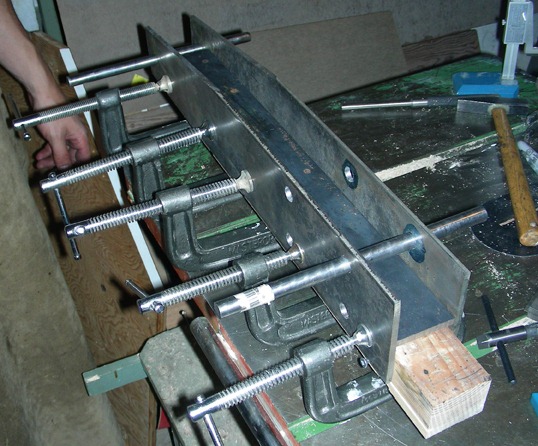
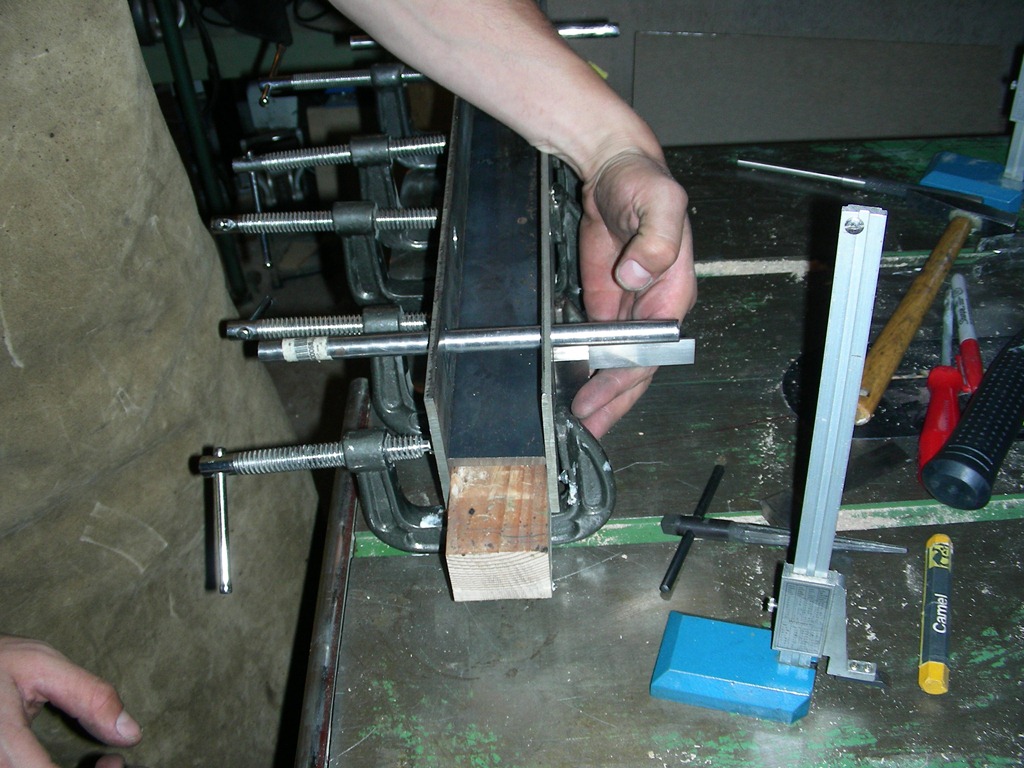
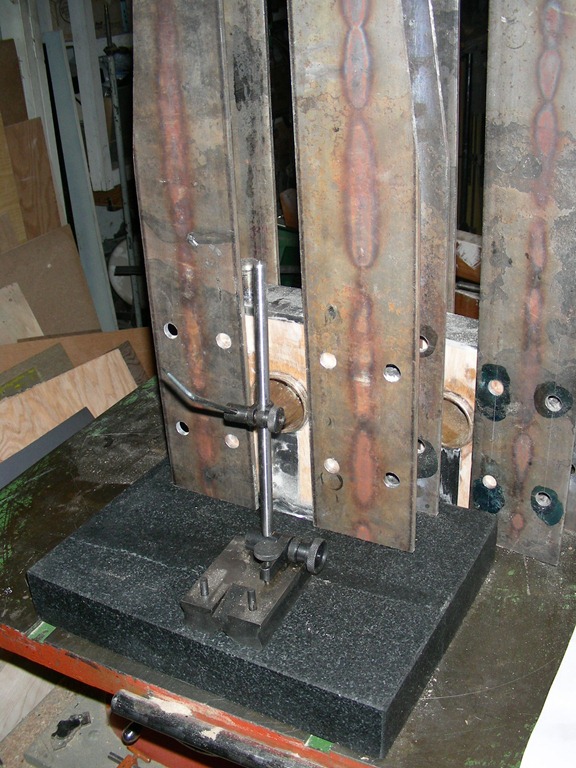
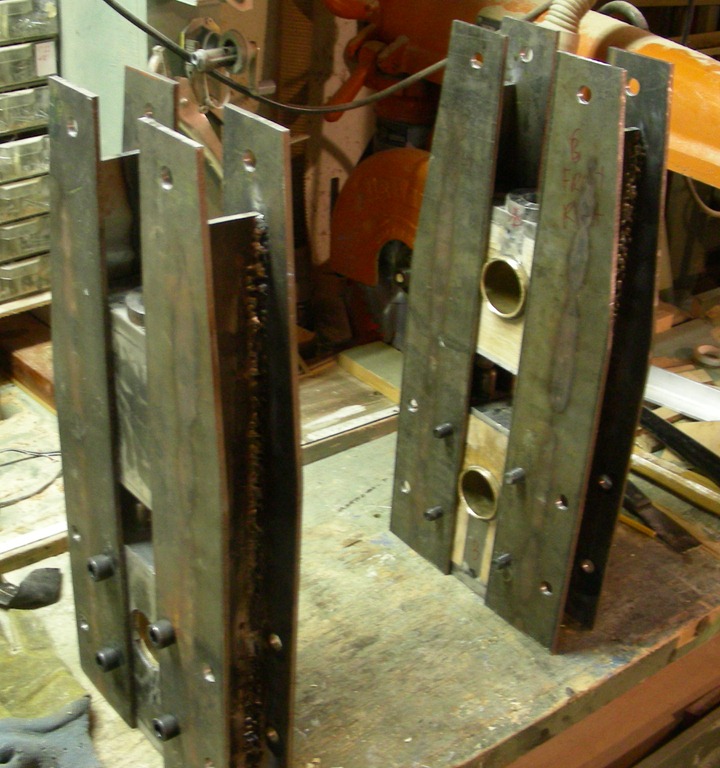
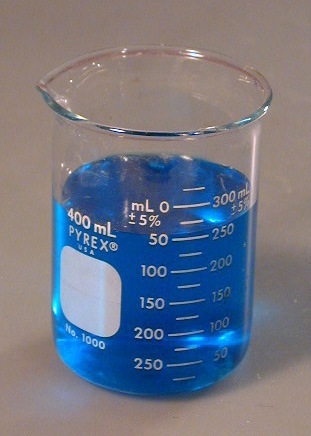
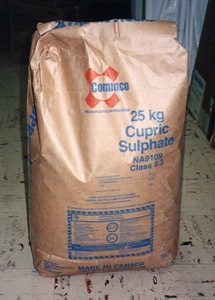
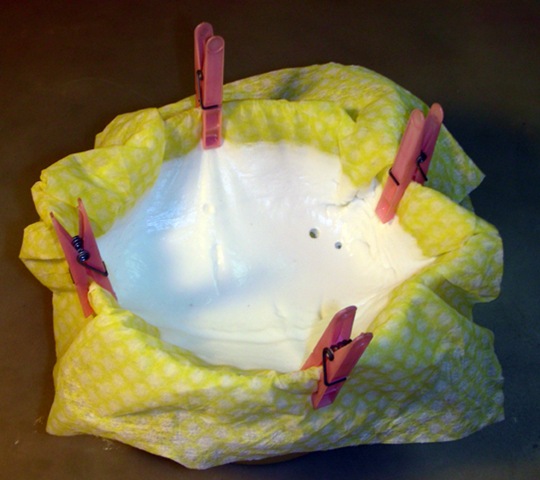
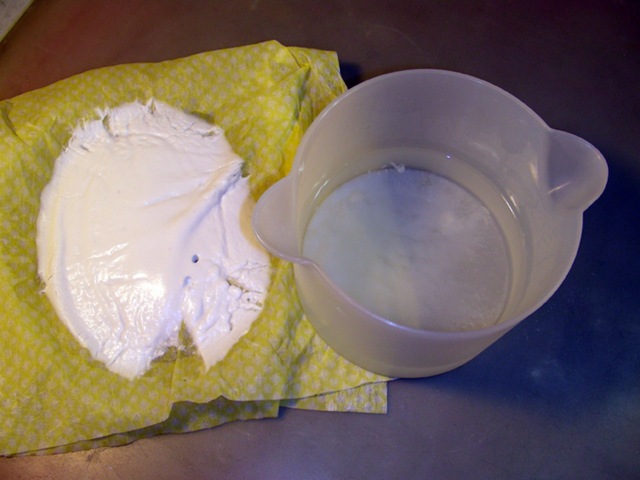
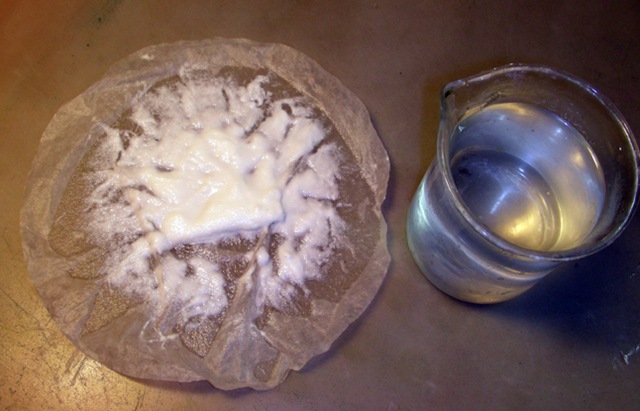
I was surprised to discover that several amateur electronic workers were etching their copper circuit boards with cupric chloride instead of ferric chloride like in the past. It turns out that this chemical can be regenerated easily with the addition of oxygen from hydrogen peroxide or other oxygen containing chemicals. The electronic industry had taken to using this technology as it is cheaper than ferric chloride that had to be purchased, then discarded through costly disposal fees. While electronic amateurs had found the process, I was amazed that intaglio printmakers had not. Since it seemed to be a continuation of the copper sulfate mordant I discovered in 1992, research into this technology seemed the natural thing for me to do.

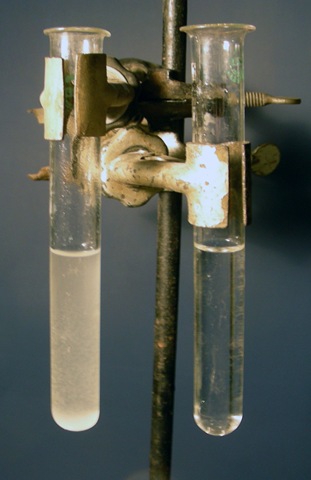
At one time in my research into using copper sulfate, I discovered that by adding enough sodium chloride to the bath so that it turned green, indicating a change from sulfate to a chloride compound. To my astonishment, I found that this bath in time would dissolve the fine copper particles left after etching aluminium or zinc and return to a bright green state for reuse in etching more metal.

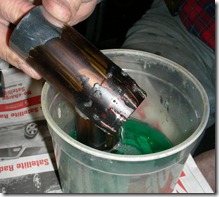
After the universities printmaking department continuously discarded many gallons of used (but regenerated mordant), it was decided to recycle the spent bath using a large plastic barrel with a spigot some distance above the bottom of the container, so that clear mordant could be drawn off when needed. I have learned that a number of American universities were recycling mordant after I made it known on my university website.
Although the copper chloride mordant etches both aluminium and zinc as I first published in LEONARDO, it would had no effect on copper, which many printmakers preferred. Research was certainly needed to introduce this new exciting technology to printmaking, so I started in earnest to find more about it.

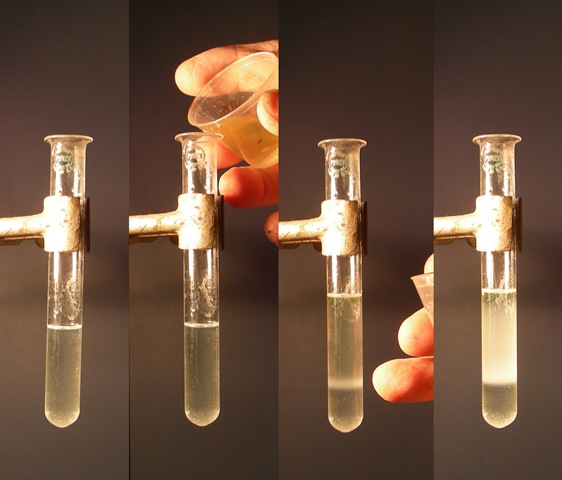
Cupric chloride is expensive and not readily available locally or even from some chemical suppliers. The electronic workers have found that a bath can be produced from a starter solution of hydrochloric (cheaper Muriatic acid) and hydrogen peroxide into which a piece of copper was added for the chemical reaction. As they etched their circuit boards, the cupric chloride would increase and make it more active until a critical point was reached and etching eventual stopped . By adding more hydrogen peroxide, the bath would regenerate immediately so etching could continue. There was no need to discard the mordant as only oxygen, and a small amount of acid might be required from time to time.
There is on the Internet a very good article by Adam Seychell, http://members.optusnet.com.au/~eseychell/PCB/etching_CuCl/index.html., in which he describes many aspects about making and using cupric chloride. Since his explanation is excellent, there is no need for me to go over that information.
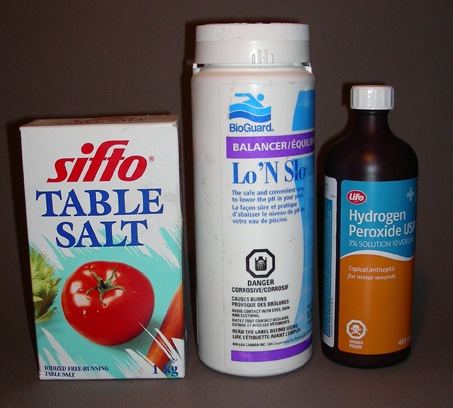
Because of my search for safer materials in the classroom and studio, I decided to find a substitute for the dangerous hydrochloric acid or Muriatic that was suggested. Hydrochloric acid was discovered by medieval Islam when salt was added to sulfuric acid. Since I was already using a weaker form of sulfuric acid in with my copper sulfate mordant, along with common salt, I already had the basic ingredients for farther research. By adding 3% hydrogen peroxide from the drug store, I found the solution corroded a test piece of copper very well. I had found a purer form of sodium bisulfate at a store supply chemicals for swimming pools which was very inexpensive – so materials seemed easy enough to find locally. While 3% peroxide worked, it diluted the bath each time I regenerated it, so a stronger solution had to be found if possible. Health food stores sell a 35% solution, but the local ones have had an impossible time to acquire it lately. I had potassium chlorate and found this worked very well, but I don’t know how much of the residual potassium compounds would affect a well used bath.
To make research simpler, I made up a saturated solutions of salt
and potassium chlorate and a
weaker one of bisulfate. These I could mix in various proportions to find which worked the best; while taking pH and specific gravity readings in all tests. Pieces of copper where weighed to .01 grams and attempts were made to get the specific gravity with each regeneration cycle. I even went into titration to get more accurate information on acidic content than what I could get with my pH meter. I found there was much leeway in compounding the mordant, depending on what metal one would be etching. I found that solutions close to 2 pH worked well enough and not that dangerous to handle. One interesting observation was the greater chemical action at the point where the long strip of copper would enter the bath. Air obviously had greater effect there and soon the strip would part into two pieces before the series of regeneration tests were fully carried out.
As the copper was dissolved and went into solution, the color would change from a light green to dark brown, when etching would basically stop. By adding oxygen, the test could continue to see how many cycles the 100 ml bath would take before contamination took place. After ten cycles and continued good corrosion of copper, I decided it was time to try actual test images on plates.
Finding a few small sheets of scrap copper in my workshop, I applied various grounds to see the quality of simple lines when printed. The time it took seemed to be slower than what ferric chloride is supposed to give, but I had no experience etching images with it for comparison. Because of the affect of air on the copper strips, I decided to make a simple air agitation system using an old aquarium air pump.

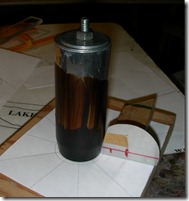
Using a porous stone that was enclosed within a plastic tube, I was able to produce a gentle circulation of the mordant over the plate and remove the Cu1+ ions that are not soluble in water. The other thing I found is that it is best to use a rather large bath so the concentration of these ions take a longer time to build up. Instead of suspending the plate with tape, I enclosed a sheet of plastic unto which I put a piece of double faced tape, on which the plate was stuck, using the contact vinyl adhered to its’ back surface. The plates printed better than expected, so on to what finer textures like aquatinting might produce.

Because I had earlier developed a technique using toner washes that is basically a “sugar lift” like process, I felt this would be a tougher test for both mordant and metal than an aquatint. This technique requires the use of Ferstman ground (Graphic Chemical waterbased relief ink) as first described in my university website. Toner can be applied directly to a plate or transferred from Mylar as it would be for lithography. The ground is rolled on with a small brayer, making sure that the first application is pressed well into the areas between the toner particles that had been already bonded to the plate. After heating the ground until it starts to smoke a bit, it becomes very tough and can take much abuse during washing out of the toner with turpentine and a soft brush. This leave bare metal in place of the toner, so that mordant can attack it easily. The results were as good as expected and much better than on aluminium.
For etching copper I suggest a bath with specific gravity of 1.2 or greater, and a pH of around 2. Some of my test baths were as low as 1.5 pH, which etched faster. Consider this in relation to your knowledge of chemistry and how you feel about using a stronger solution. As for etching zinc, I would stick to the simpler copper sulfate and salt formula as I suggested in my Leonardo article published in 1998; but with more salt added to make the bath green in color. Aluminium is best etched in the same bath with bisulfate added to keep aluminium hydroxide from forming. While this new process will etch both zinc and aluminium in a diluted solution, there is no reason to use a bath which is more acidic than the original mordant turns out to be. It was the electro chemical action that makes the original process so interesting and safe.
I had sent the information on my research to Alfons Bytautas at Edinburgh Printmakers, where he teaches etching. While giving a workshop there on my waterless process, I saw the plates Alfons had etched with his formulation using the basic data. He used an open tray with a bright green solution that seemed to etch well within the time reserved for ferric. I also introduced the process to printers at Black Church and Graphic Studio in Dubin, Ireland. The solution was put together without carefully measuring materials, but the copper plates with numerous test lines etched quickly and cleanly in both cases, using only a tray.
While I may not have created a completely new process, by removing liquid acid from the studio, it may be of some help to make it safer. It seems to be a continuation of my basic etching process developed in 1992 and made available to printmakers shortly after that. Why it took sixteen years to get this far puzzles me.
Posted in Research |
October 26th, 2008
In 1991-2, I was teaching a first year printmaking class, eventually getting to intaglio in February. When I asked the students to purchase a sheet of zinc from the bookstore, a girl came to me very upset as she could not afford the metal at this time of the school year. Was there some cheaper metal that could be used instead? I thought of iron and aluminum, but felt the latter would come with a smoother surface and require little polishing before applying the hardground. Besides I didn’t like the farther use of nitric acid for iron, so chose aluminum for the small editions required in my class. When I suggested the change to the department head, he rejected the use of ferric chloride, one of the possible mordants other etchers had used. While stannous chloride was a possible alternative, it was hard to get and very expensive when the charges for shipping dangerous materials was added.
A few years earlier, while I was demonstrating my toner process for use with positive lithographic plates, the master’s student, Christine Christos had become interested to see if the technique could be used on intaglio photo plates as well. While she succeeded to expose and etch a zinc plate, I became interested in getting nitric acid out of the classroom, so started to work on using electric current to remove metal. We worked together and eventually published an article in Leonardo, Vol. 26. #4, 1991. This technique was now available for our students with the power supply unit I assembled for the department, but only a few students chose to use it, even though it could etch any hard metal for very large editions. It worked well on aluminum, but having only one power supply unit for a large class, did not allow many etchings to be made in any given period, so another method had to be found.
Years earlier, as a lithographer who wanted a better ink base on aluminum plates, I tried a formula used by platemakers for deep etch plates in the offset printing industry. Its’ major active chemical was cuprous chloride (which I didn’t have) along with hydrochloric acid; so hopefully I tried copper sulfate and the acid to see if it might work. When I tried the solution, there was no copper plating on the aluminum surface, but corrosion where the liquid was applied. After a few varied attempts, I gave up the idea, but this unsuccessful research had stayed in my mind. Was it possible to use this chemical reaction to produce good images on aluminum, I asked myself?
I had some thicker aluminum at home that was used on other projects, so I immediately started to do research with copper sulfate as a mordant. I was able to get good results to find it worked well on aluminum and zinc, so I started to experiment its use in the class – with one bath for both metals.
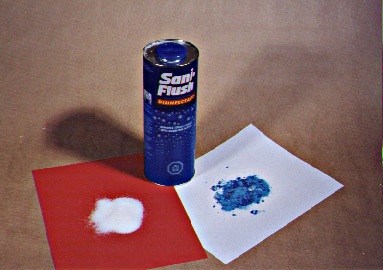
In the spring of 1992, the university hosted an international conference “New Directions in Printmaking; the technical side”, in which new safer techniques were featured. As the etching mordant was not fully developed, we only had the bath in the print studio with information about it for those who were interested; but not put into the official program. I recall discussing the technique with a number of etchers who where fascinated in the blue solution. Later I discovered that the bath corroded both metals by just adding common salt instead of hydrochloric acid, so introduce that process into teaching the summer session class that year. I soon found that the acid had kept the formation of aluminum hydroxide at bay, which forms a gel-like solution that makes the bath unsightly and reduced it effectiveness. What was needed is an acid that would not interact with the aluminum, just constantly removing alkalinity so the hydroxide would not form. While either sulfuric or nitric acids would work with oxygen in their composition, I did not want to use dangerous acids if possible. The answer was sodium bisulfate; a weak form of sulfurous acid that I was accustomed to using in my goldsmithing practice. Since this material was harder to acquire, a cheaper and perfect alternative turned out to be Sani-Flush, available in grocery stores across North America; used as a toilet bowl cleaner.
Recently, while looking through my research notes for another reason, I ran across the work I was doing to see how much aluminum would be removed for a given weight of copper sulfate. These tests are dated November 12 and 13th, 1992, not quite a year after my first experiments. I had just retired from faculty, but appointed as artist-in-residence; still having access to the resources at the university. Because the process was working so well, I decided to submit a paper to LEONARDO, the international refereed journal in the arts; where I already had other articles published. To better appreciate the chemical reaction, which was now beyond my basic understanding of chemistry, I contacted the department of chemistry for their help. Dr. Bader accepted the challenge, along with some other professors, who in turn involved their students in the project. The students were asked to figure out exactly what was happening and try to explain it to their professors; then give me an explanation as well. From Dr. Baders’ and the students account, I put together the article that was submitted to the editor of LEONARDO in April 5, 1994.
I told the editors that the article was already being distributed by mail as I had Xerox copied my papers for universities across the continent, sending it along with other printmaking information. Printmakers in other countries were now also in contact with me by e-mail, seeking information on the toner and waterless process I had developed earlier. I can’t remember exactly when I put up my website on the university server, but that reduced the cost of copying and mailing large bundles of paper. As the copper sulfate mordant became better known with this move, I started to get more inquires for that process than the others I had developed. To this day the copper sulfate mordant paper on my university website gets the most attention.
The article was accepted by the referees, but I was informed by the editor that there were now some concerns within the LEONARDO office in San Francisco, where copper sulfate was the cause of pollution problems in the bay area from the wine growing valleys nearby. I explained that there was no reason for anymore copper being released into the water than from etchers using nitric acid on their copper plates, or even the copper pipes used for plumbing. Probably even less; if care was taken in handling materials. A second set of referees where chosen and the review process started again. Finally the article was published in LEONARDO, Vol. 31, #2, 1998.
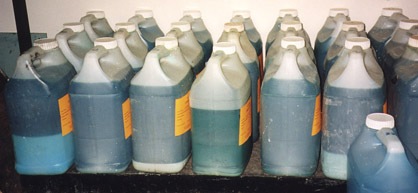
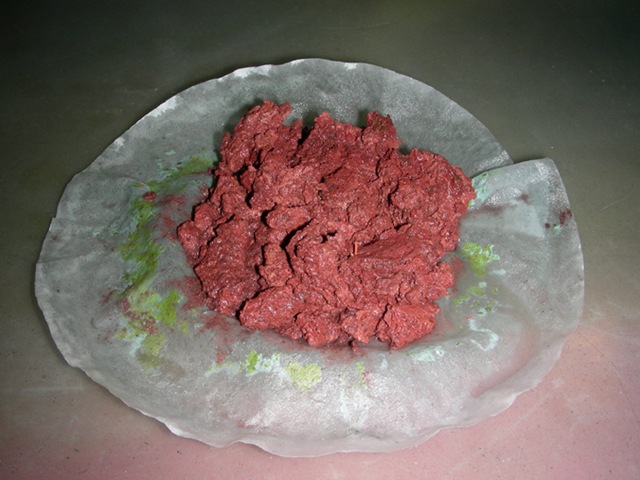
Because etching is not my major printmaking media, I have done much less work with it after my initial research. In my later summer session classes, I started to use larger amount of salt to produce copper chloride, which was much more active than suggested in my first publication. Now I called for enough salt to be added until the solution turned green. I also discovered in my own research at home, that this solution would redissolve the free fine copper particles produced during etching, when left overnight. While this process could not likely go on indefinitely, it could continue a long time if the aluminum hydroxide could be removed as it settled in a resting container. The university has installed a large plastic barrel with a spigot a bit off the bottom, so that the alumina could settle, allowing the reclaimed green mordant to be put back into service.
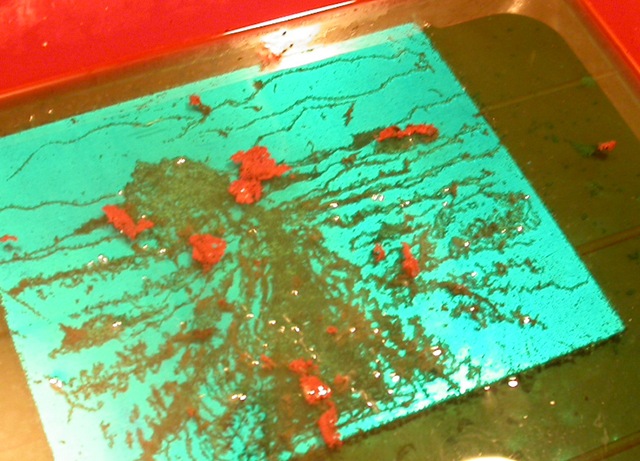
Because of the price of zinc plates, they are seldom if ever used by our students, as large sheets of aluminum are precut into 24 x 32 inch sizes for sale to them at a fraction cost of zinc. Unlike the zinc and acid etchings, the size of the printed images has greatly increased, demanding a special tray just for the very large plates being used by some of the students. The characteristic of aluminum is the crystalline structure within the metal, which is revealed by the copper sulfates action. This means there is no need for aquatinting to get solid color or lighter tints of any hue. In our etching trays, we have plastic grill work, coming from discarded fluorescent lights, which is raised off the tray bottom to allow any sediment to rest below undisturbed.
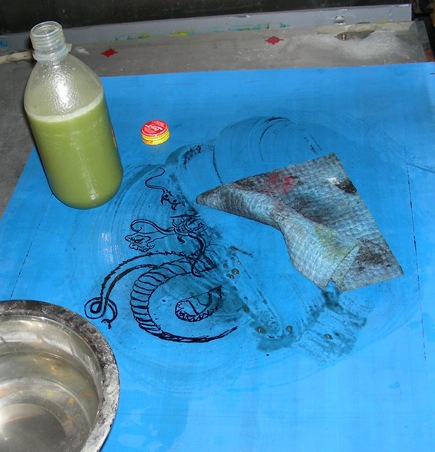
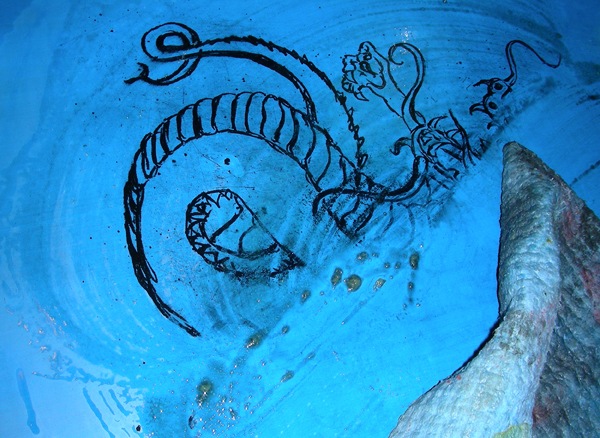
Action of copper sulfate on crystalline structure of aluminum
I have presented the process at a SGC conference and included it when ever I was asked to give workshops at universities across North America on my other innovations. Copper sulfate has become very popular in Europe for etching zinc under the name of Bordeaux and Saline etches. It is considered to be much safer on zinc than ferric chloride, which can produce chlorine gas as it is very reactive with that metal.
When I started to do my research into using copper sulfate, I had no idea that Goya might have used it in some of his zinc etchings. This only became known to me by what Cedric Green had said about Bordeaux etch, after I became aware of his website. I wonder how many times the wheel has be reinvented?
Anyone wanting more technical information on this process, you can find it on the University of Saskatchewan website at: http://homepage.usask.ca/~nis715/.
Nik Semenoff
Posted in Research |
August 14th, 2008
Results have been encouraging with the new mordant I have working on. It etches the three common metals used by printmakers, with zinc dissolving the fast and copper the slowest. While there seems to a number of ways to mix a suitable mordant, I have decided to make a stock solution that will work best for copper, but too strong for the other metals – but diluting them to suit the image.
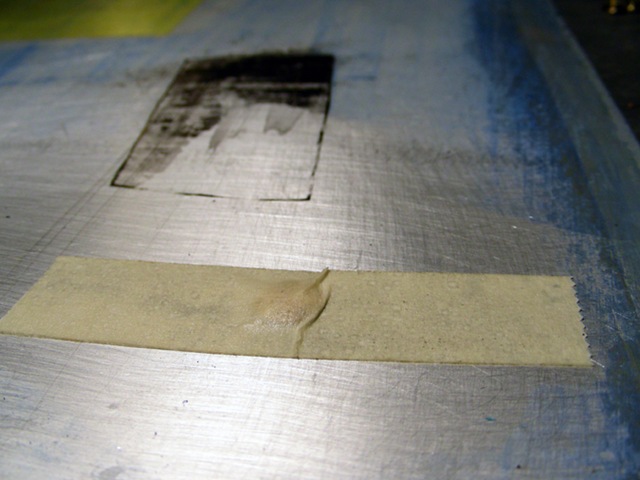
Again I have used toner washes to find out the limits of a mordant as the fine detail the particles can give really tests both the etch and metal. In all cases, I don’t apply blockout to the plate beyond the image as I want to see how well the ground has stood up against a mordant in the very thin layer, so bear with the breaks in the background. The toner copper plate was etched in a small vertical tank where the solution is gently recirculate by air bubbles. The remaining plates were etched in trays.
These plates are not made as works of art but for important information about depth of etch and quality of edges etc. The copper plate is a piece of scrap I was able to acquire, but it has seen days at one time. I didn’t need to take the time to polish the surface for these tests.
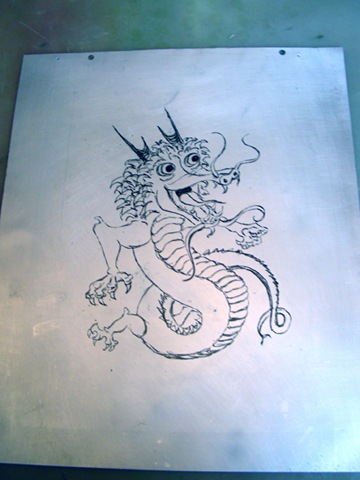
Zinc etches the fastest producing very fine bubbles that keep the lines clean, but not big enough to block the etching action – no need for feathers. This plate printed thin toner brush lines, just like in lithography, but without the very fine detail of waterless lithography images. The ink was Daniel Smith Standard Black that was modified with their DS relief ink, or with a water soluble ink I ground myself. This makes wiping easier but produces more background tone.
This copper plate was etched in a tray, using Future floor polish as a hardground. This copper plate also came from the same scrap heap and contains deep scratches that don’t take away from the information I hoped to get. In the tray this plate took over 1/2 hour to etch, but it still not as deep as I would like. The image has been flipped horizontally to make it easier to read the text.
This zinc plate also had a Future hardground, which was not applied carefully, but etched in a diluted version (75% water) of the stock solution used on the copper plate. Etching took only about 7 minutes and I believe I would dilute the mordant by even more next time. The used mordant was regenerated quickly or could have been kept to do it by itself over a couple of hours.
When I finish all my research and get some feedback from a few dedicated etchers who have agreed to test the mordant, I plan to publish in the international refereed journal LEONARDO; as I have with all my other innovations. Hopefully, once the manuscript is sent to the publisher, I will reveal the formula and method of working.
Posted in Research |
July 28th, 2008
I have been testing my new mordant for copper plates and here are some results. I have gone through the usual line work using Ferstmans’ hard/soft ground that is on my university website. That all worked fine, but the true test is the use of toner washes that print as a positive, just as drawn on the plate. At one time I used diluted shellac until I was shown the hard ground made from Graphic Chemical Ink Co; developed by Gerald Ferstman at the university in Lexington, Kentucky. It is a waterbased relief ink that uses emulsified shellac as the binder, so reacts to heat in much the same way as diluted shellac.
The toner wash is applied in a thinner manner than for waterless litho because the darker areas will print solid color from the aquatint effect of wiping the plate. The toner is set with heat to make sure it is bonded very well to the plate, then cooled. The ink is modified with a bit of softer plastic material as shellac become brittle when dried with heat in this technique. The ink is rolled out on a slab into a very thin film, which is easy to judge by the color intensity, then applied with firm pressure over the toner image to make sure the ink contacts the metal between the particles of toner. Roll the ink on from many directions to make sure all areas are covered, but do not build up a thick layer of ink, especially in the image area.
To harden the ink, I use a propane camp stove as I do not have a hot plate, but even most of these are not quite hot enough to change the shellac into a horn-like surface that will stand up to any mordant. The ink has to get above 150 degree centigrade for this effect to take place.
After the plate cools, I take turpentine and short stubby brush and start to dissolve the toner through the shellac film. At one time I used a coarse stencil brush, but found a short softer one used to apply facial makeup, which seems to work better. Take your time and gently washout the toner image, leaving bare metal for the mordant to attack.
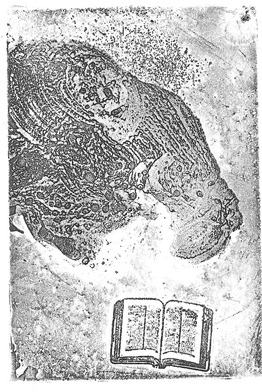
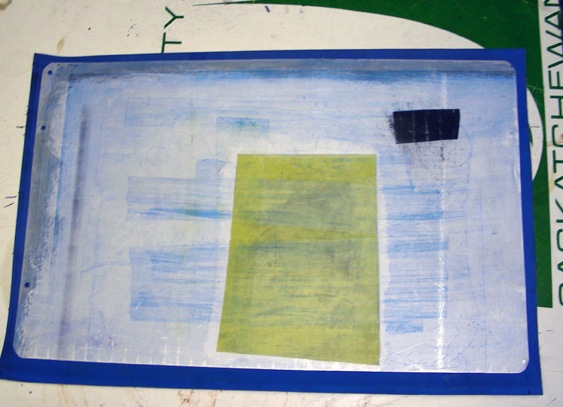
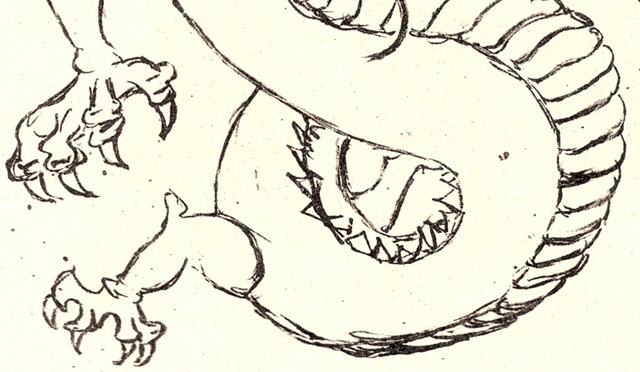
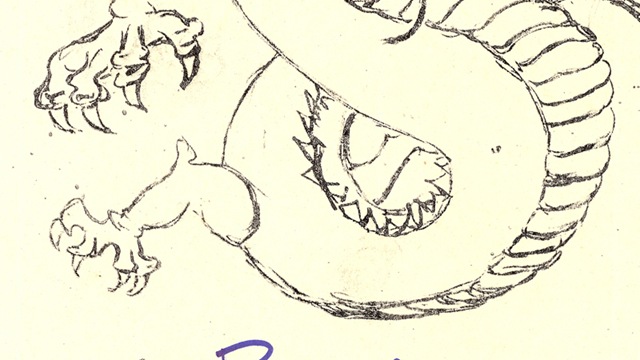
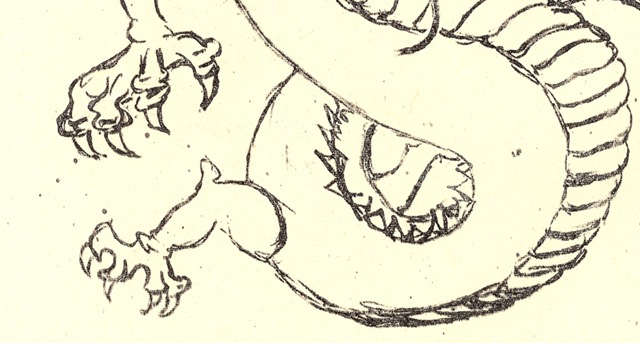
While a tray bath works well, I have found that bubbling air through the mordant speeds up etching, but I devised a system so that there is a more gently flow of mordant against the image, producing a more even tints across the entire plate. The plate was etched for about 30 minutes in my first test, but I found that was not enough after pulling a proof. To get a better bite, I cleaned the plate and when I was doing more research, I applied a very thin film of the waterbased ink as before, making sure the depressions were not filled with ink. This plate was re-etched to produce a darker image. Compare the two image above.
For another test, I repeated the toner wash on a new copper plate and etched it for about 45 minutes. This is not an accurate test as I had modified the mordant a number of times between the above plates and this one, so activity would certainly be different. Such things as specific gravity and pH are a factor that were not always recorded or taken into account.
This was an old piece of common copper in my workshop, which had seen better days, so it was hard to remove the blemishes and scratches on the surface. While the dark area looks fine, this plate could be improved by using the rolled on ground again to etch the left side image, but block out the dark image after the ink had been hardened with heat. Future floor polish works fine as a blockout.
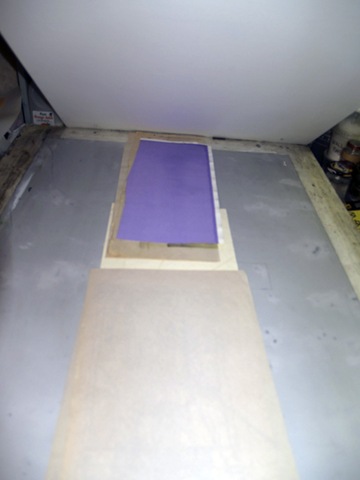
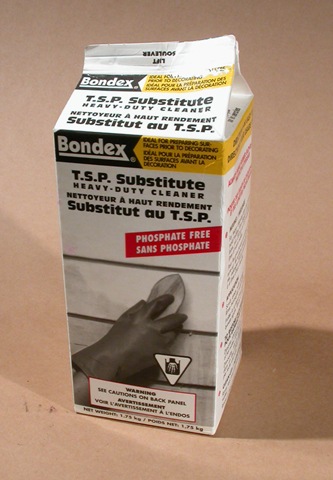
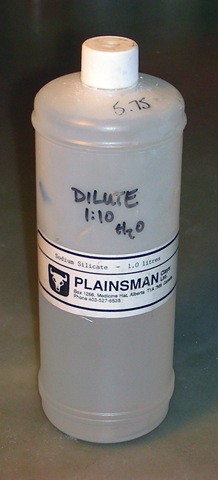
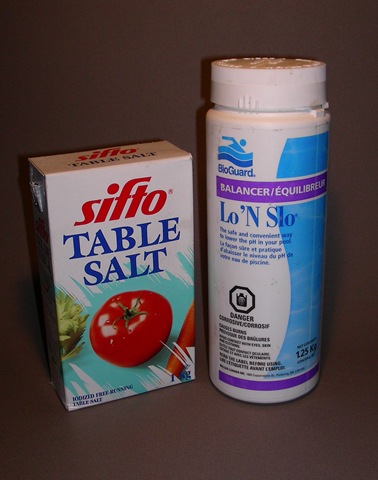
The hard ground it removed from the plate with sodium metasilicate in most cases, but the ink could be hardened enough with high heat that it doesn’t want to come off easily. For copper you could use a strong chemical such as sodium hydroxide and let the plate sit in a solution for some time. In very severe cases, I have had to place a facial tissue on the plate, wet it with lacquer thinner, then place another plate about the same size on top to prevent fast evaporation. That has always done the job.
The ink I used was Daniel Smith #7 Standard Black Etching that was modified with their waterbased relief ink to soften it; instead of using Easy-Wipe. On drying, the proofs are completely waterproof as with regular ink. The nice thing about this feature is that the plate is washed out with sodium metasilicate or a commercial waterbased grease remover. No solvent is required for any reason. I also use Tulle fabric, instead of expensive Tarlatan, which can be washed out with soap and water after a printing session.
So what is the mordant formula? Keep in touch as I will disclose it and other mordants I have been working on for aluminium and zinc – after I submit it to be published it in a journal in the near future.
By-the-way, this toner wash technique works well on zinc and aluminium with my copper sulfate mordant; as well as on copper plates with your favourite etching bath.
Posted in Research |
July 13th, 2008
Over the last couple of years, I have been in steady communications with Jerry Larson, the man responsible at 3M in the 60’s to get commercial waterless lithography started. He has been of great help lately with me trying to come up with a simpler, cheaper method of making positive waterless photo plates. I wish I knew him in 1990 when I started to research my waterless process, which probably would have made my struggle easier. As a retired PHD chemist, he is still interested in everything doing with printing, as he was manager of R&D for commercial printing industry products, having invented Color Key – which has suddenly made all those wonderful offset proofing presses available to printmakers.
In his continued interested with all things concerning waterless litho, he has been looking into what Presstek has been doing with their computer generated plastic plates and multicolor presses. This method certainly is simpler than exposing Toray plates, using either positive or negative transparencies and the slower turnaround of jobs. While today’s Presstek plates are exposed directly on their presses with infrared diodes or lasers, the early patents included sparks to somehow remove the ink rejection qualities of silicone. He is great at researching patents on government websites, and can understand all the chemistry involved – while I can only look questioningly at the organic formulae. Lately we have been discussing the spark method and he wondered if there was anyway it could be used by artists for imaging. He understood that there should be some method by which one could see the effects of the sparks action, but didn’t know quite how it could be done without some serious thought.
Since I had a Tesla coil I had built with my young son, sitting in the basement because it was too powerful to play with, I told him I would see what the spark energy would do to a siliconed plate. Today I decided to see what may be accomplished and show the interesting results. While this is just for the fun of seeing what is on the other side of the mountain, I don’t see it as a serious imaging technique. I may fool around with it for some weird line textures that can’t be produced in any other way. It is unpredictable at this time and might be harnessed with lots of effort, but not likely.
This was my first test to see if the silicone would be affected in any way. To see if drawing a line might make it easier to control an image, I used a Sharpie marker on top of the silicone. The interesting result is that the broken marker line acted as a insulator for the spark and can be seen within the darker line. The lighter one to the side is just a test to see how the distance from the plate might sharpen the spark by going faster across the surface.
I quickly learned how to protect myself from the high frequency energy that is strong enough to make a fluorescent bulb light up when brought close to the unit. The plate was grounded to the Tesla coil case, the output was an insulated wire to a sharp metal point – with considerable greater insulation where I was holding the probe. Still some surprises to keep me awake. Lots of ozone smell in the area.
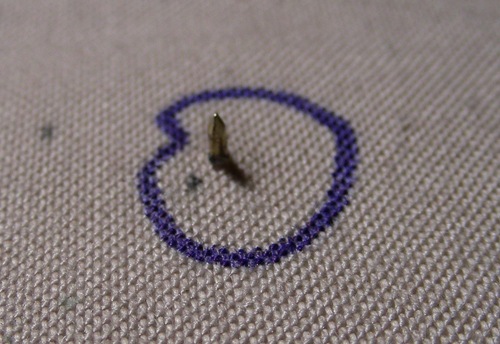
My second test consisted of marking the silicone surface with a Sharpie, trying to follow the lines by varying speed and the probes distance from the plate. On rolling up the plate, I found weak areas, so back to the Tesla coil. Again the insulation effect of the lacquer film on the silicone plainly comes up on a properly inked plate. To get a better idea of scale, the circle figure is 5.5 inches across; the upper figure is exactly the same when I scanned the printed proofs. It certainly produces an interesting line with serendipity effects, something like toner and grease washes as they reticulate. I can see where it can be used to produce a better looking image. There may be ways to get better control, but is it worth the effort?
So why did I take the trouble? One is to give Jerry my reaction and show him what a Tesla coil can do; but that it certainly must be different to the better controlled spark system advocated by Presstek. It does prove that high energy sparks can make the silicone less effective in rejecting ink.
While this experiment will likely not lead to anything, it is the kind of unusual thinking that brings about advances in science and art. Without this kind of unconventional approach, we may all still be drawing images on cave walls with pieces of charred sticks.
Posted in Research |
June 11th, 2008
For the last little while a printmaker interested in using toner for images on stone, has been asking about a good replacement for vinyl Deep Etch V lacquer. To get vinyl screen ink costs much more than needed by the average printmaker as the ink is not cheap and the solvent is only sold by the gallon I believe. I had some suggestions about her inquires on a number of varnishes etc., that say they contain vinyl and cellulose materials, saying they would have to be tried. Today I decided to send her this reply, but realized it may be of great help for many other lithographers out there.
Dear Nik,
I wanted to start a new thread on this because I think the topic needs review. Lacquers. Why were vinyl lacquers preferred in the first place? Was it solely because of durability (read: longer print runs)? Drying time(short)? Hydrophobic properties? Most lacquers share this property to some extent. I’ve been looking at the Tamarind shellac as an alternative too. I think flake shellacs are traditionally alcohol based so it might stand to reason that mixing them in with oil-enamels and thinner would allow them to mix…although I noticed the Tamarind people had a reminder to stir the mixture well prior to applying. I had no luck at the paint places finding vinyl lacquer I’m guessing lacquers are there I just need to know exactly what I want when I ask. I’ve a friend who teaches graphic arts and printing who I’ve put out an e-mail to I think if anyone can track what I need it’s him. The studio here only uses water-based screen printing inks from what I was told last night so I don’t think those would work too well. Thoughts? Thx.
~m
Hi: ~m
I believe vinyl was started to be used because it is very resistant to water, which is why vinyl siding is popular. Besides it is one of the cheaper plastics that has been around for a long time. It dissolves in a number of solvents – some not too toxic, but offset printers want something that evaporates fast as time is money. They are tough and used as glue in white glue (Bondfast and others), so stands up to any abrasion action from the rollers and blankets.
Tamarinds shellac mix makes no sense to me. Try adding paint thinner to your diluted shellac. While alcohol and hydrocarbons mix, shellac is not affected by solvents. They are incompatible and why I used shellac in my traditional days to make reverse images on stone. Hydrocarbons don’t dissolve shellac and mixing enamel into it only makes sort of a poor emulsion if that. I have never tried their mixture as I was well into waterless before I heard about it and since it didn’t compute, I left it alone.
In my traditional days, I ran out of the little of the Titian lacquer given me by the platemaker at the printing plant where I worked at one time. To make do, I used shellac from the paint store and diluted it with butyl alcohol that I happened to have. It worked fine and not as smelly or toxic as the Titian stuff. Commercial ready shellac is dissolved in methyl alcohol, which evaporates too fast for spreading on a plate, but a small amount of butyl alcohol acts like a retarder. The Hanco Deep etch V stuff smells of amyl acetate (banana oil) and might be the major solvent for vinyl plastic. I don’t know what Daniel Smith uses as the replacement for this Hanco material.
Just to make sure I was right, I went to the studio and did some tests. I put a small amount of 2 lb shellac mix into a container and stirred in a few grains of Erosin red dye crystals. I added to the first batch a very small amount of 1-Butanol and it mixed in perfectly. I spread some on a plate and buffed it down with a tissue. It would have dried in a few minutes, but I hurried that along with a heat gun. The film was tough and could not be scratched with an unsharp instrument. I repeated the experiment with Butanal 2 (secondary alcohol) with the same results.
Because these solvents are still considered toxic I decided to try polyalkylene glycol in DOT 3 brake fliud. This stuff is not considered toxic and worked as well even in a smaller amount. So I would suggest you get some shellac from the paint store, making sure it is still fresh as it deteriorates over time when dissolved. For coloring you do not have to get the chemists ones I used, but use aniline dyes from Lee Valley. Still expensive for the larger quantity sold, so I tested Dylon #23 Scarlet and it dissolved in alcohol. This dye is found in a fabric store. If you are concerned about toxicity of methyl alcohol, you can dissolve orange shellac with denatured ethyl alcohol if you can get it.
If I was still working in traditional litho on stone and plate, I would certainly work on improving this lacquer replacement while printing editions. It washes out with acetone or isopropyl alcohol, but if I wanted a slower evaporating solvent, I might add a bit of odorless paint thinner as a retarder.
If you have any more questions, get back to me as I may be able to help more.
Cheers
Nik Semenoff
Posted in Research |
May 26th, 2008
Bonnie Sheckter in Toronto has a Hunter-Penrose 30 x 40 inch offset proofing press she no longer needs. It looks like a terrific press that should make some lithographer more productive. As you know, I believe the quality of prints done on an offset press are much better, with less stress on the printer in pulling proofs. You can contact Bonnie by phone at 416-658-1565, or by e-mail at bonniesheckter@sympatico.ca.

Posted in News |
March 28th, 2008
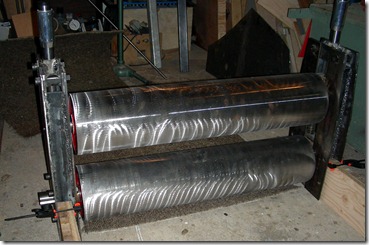
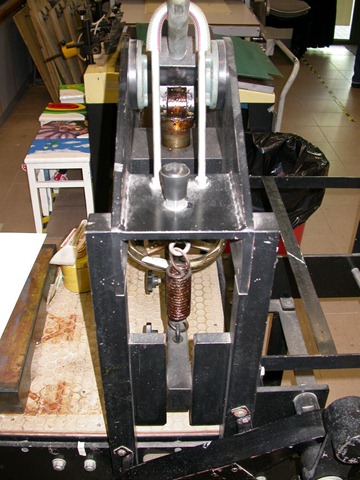
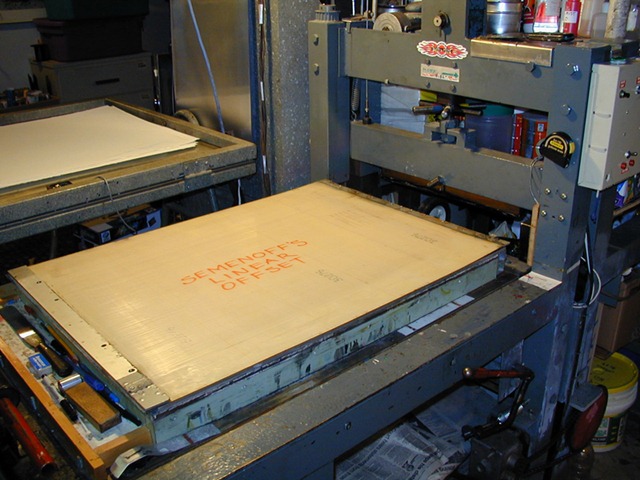
Recently I have found the wisdom to again use my linear offset attachment so I could get nice flats and better detail in the fine inkjet images. I have always known that offset printing is much gentler on plates, but using delicate surfaced waterless plates makes this even more important.
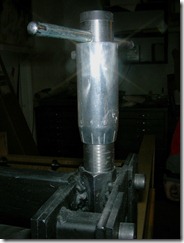
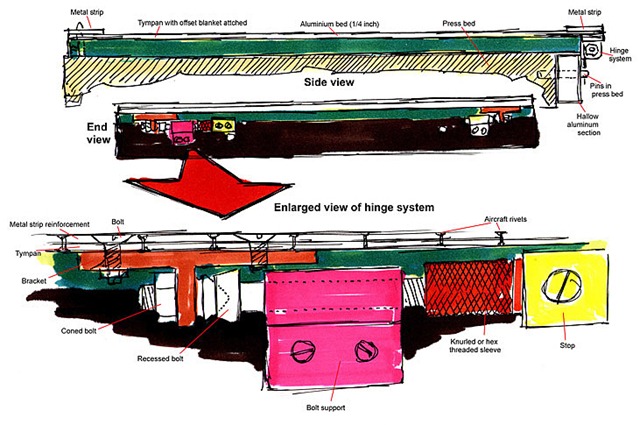
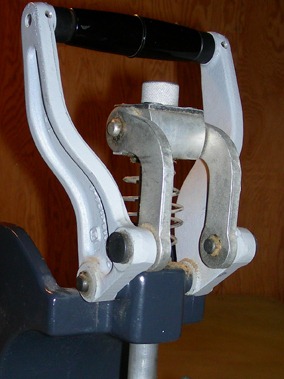
A rubber blanket is glued to a Lexan tympan, which is hinged to a sheet of 1/4 inch aluminium by way of a
retractable system, making it removable to clean off
ink after finishing printing; easier than if the blanket is vertical. The aluminium support is attached to the press bed by means of pins in the side of the bed and removable pins from the top at the other end.

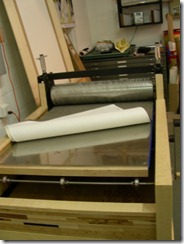
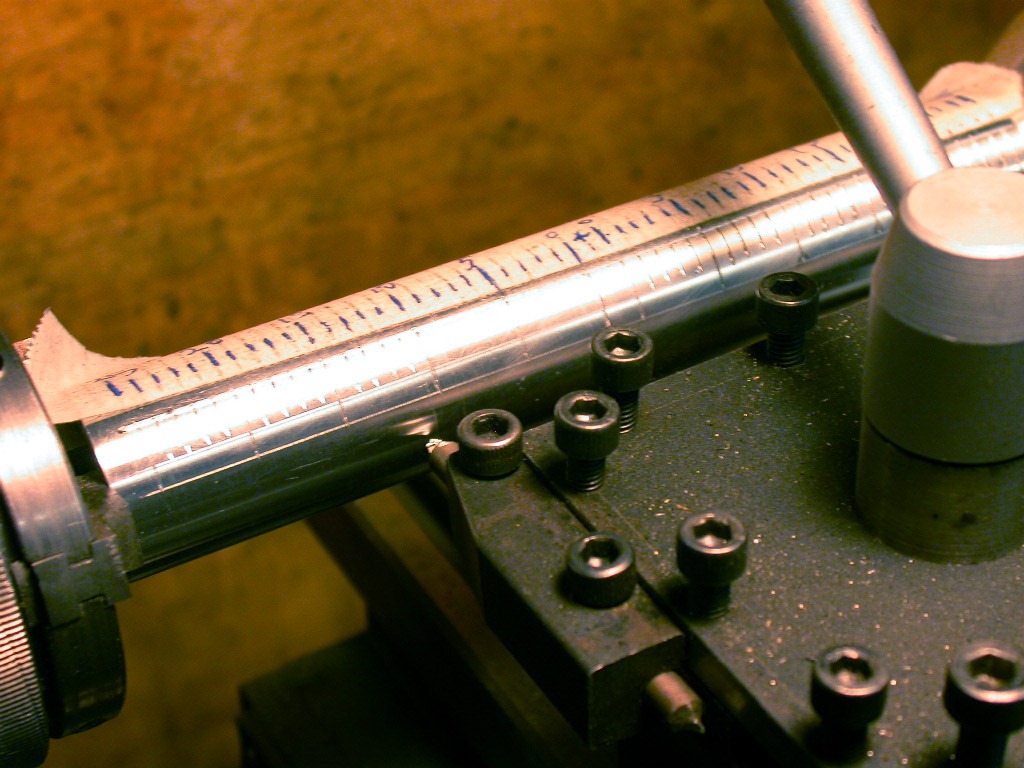
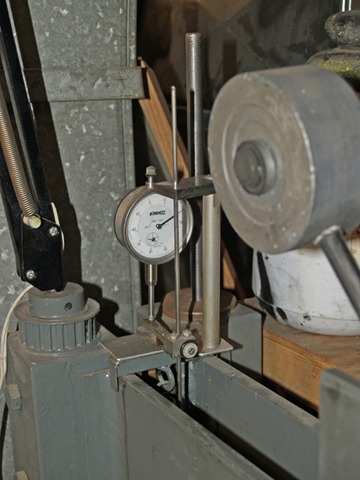
A rolled up plate is put on the bed and the blanket is brought down unto it. The blanket shows off the reflection of the ink, also the interference pigment that has offset from the print of a previous color. Offset doesn’t require much pressure; so I have added a dial gauge set up to measure just how much the scrapper bar in forced against the tympan. I use colored handles on the pressure system to make it easier to remember how much I moved the settings.

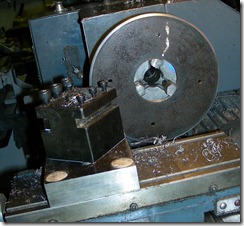
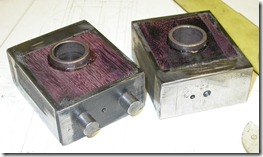
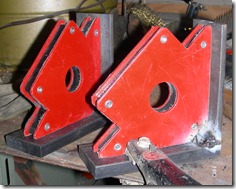
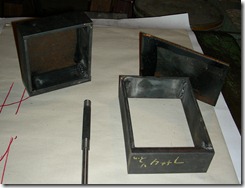
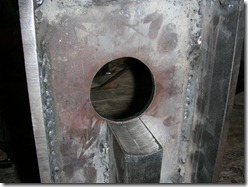
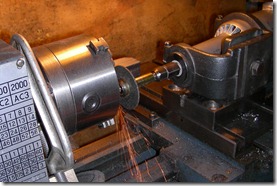
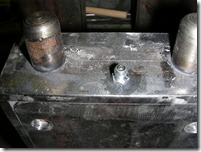
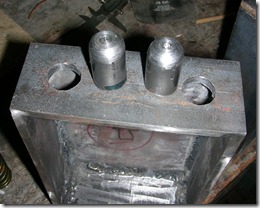
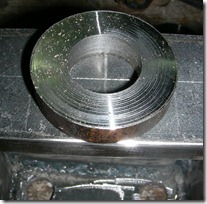
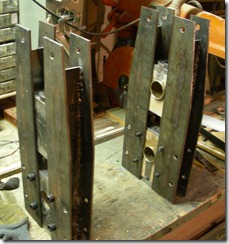
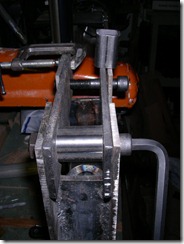
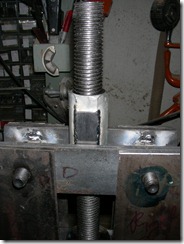
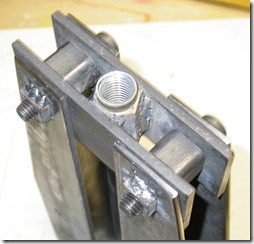
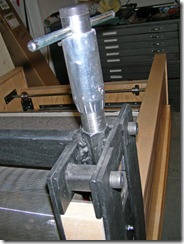
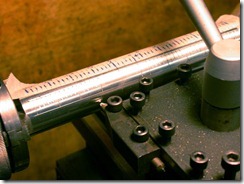
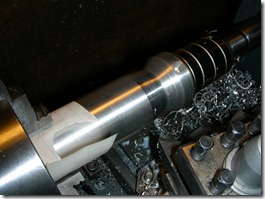
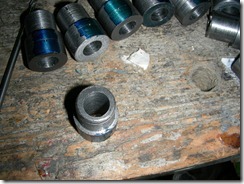
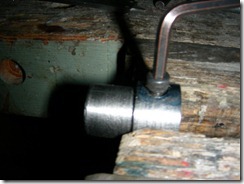
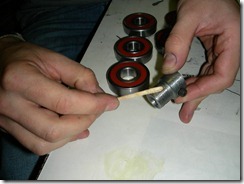
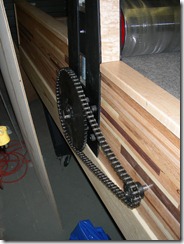
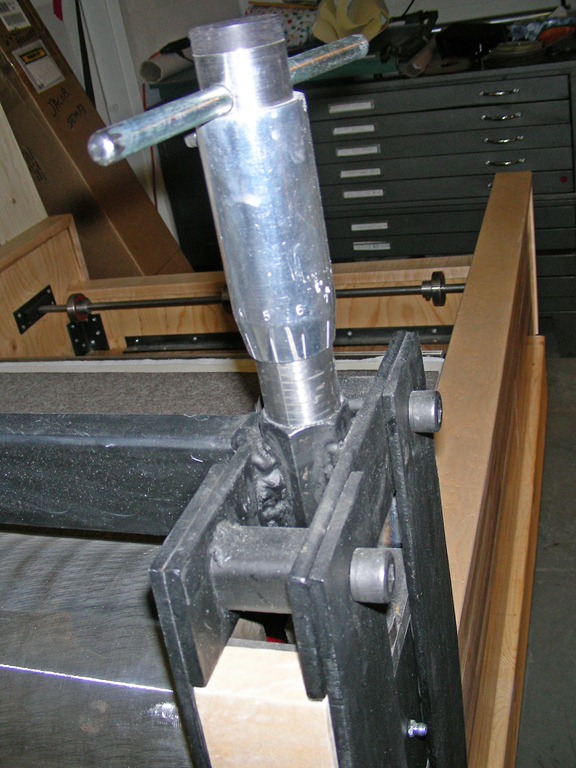
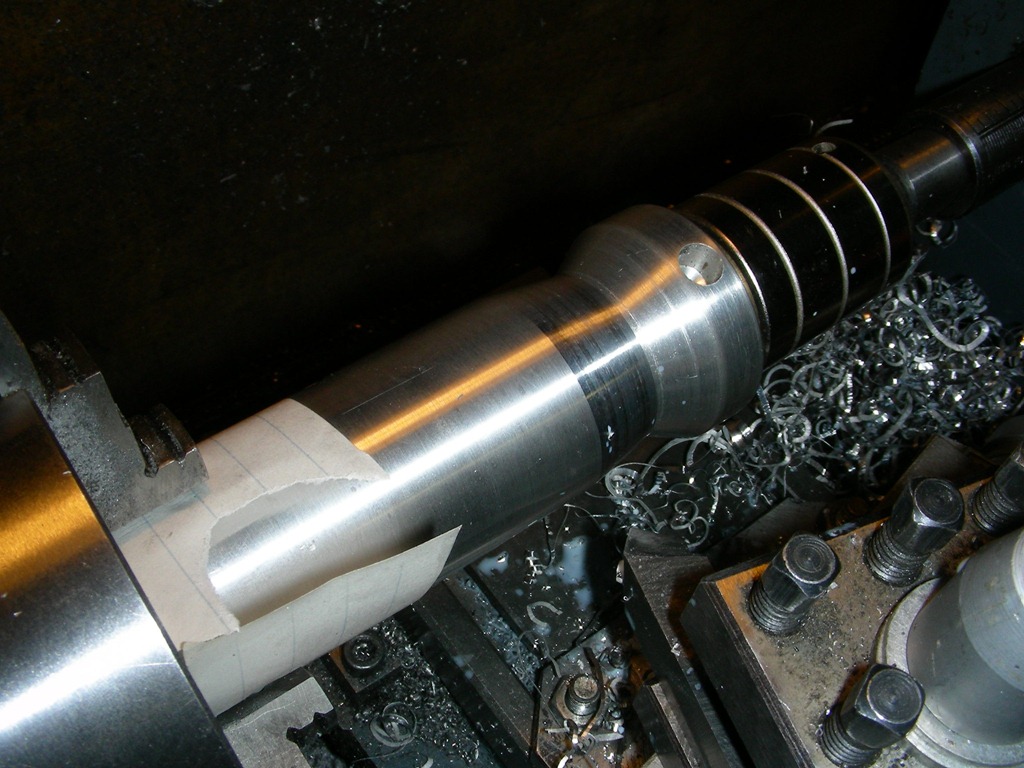
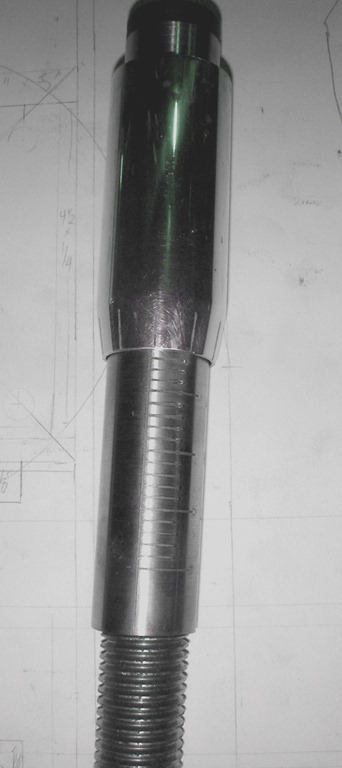
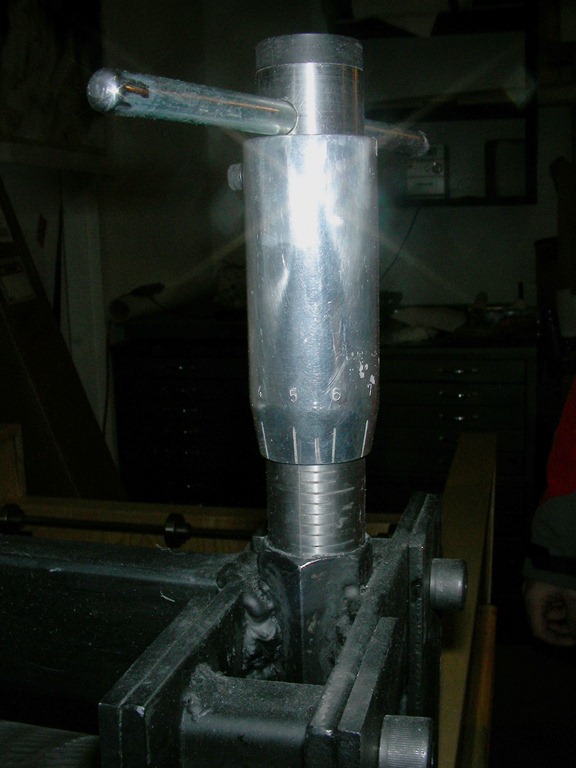
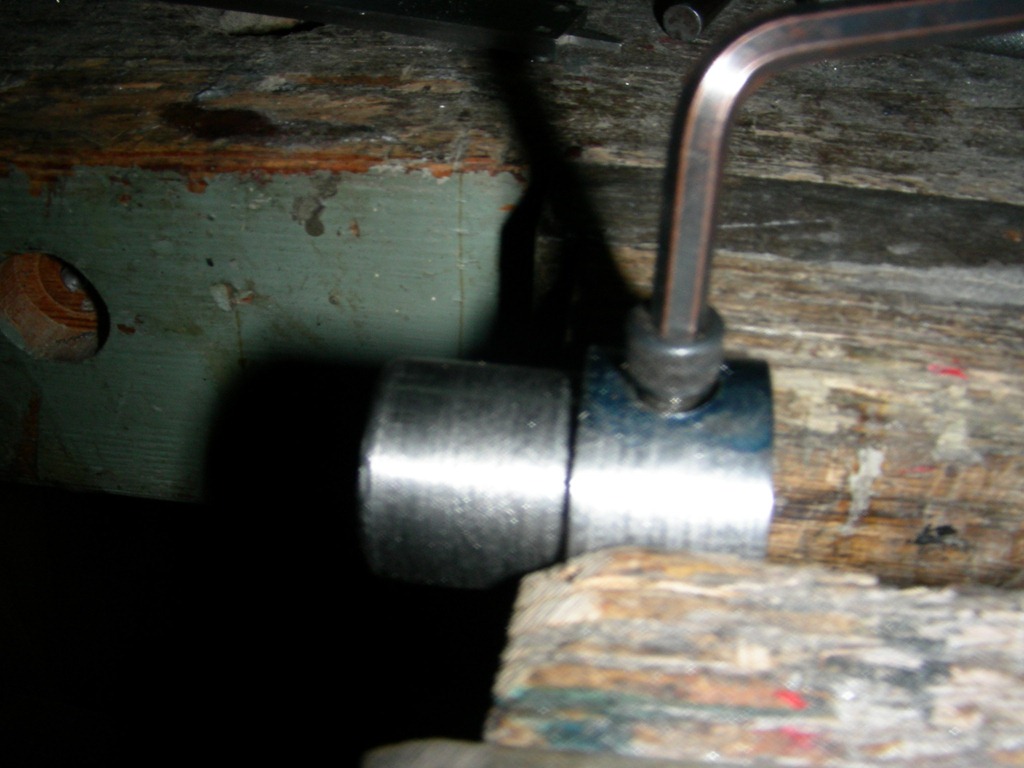
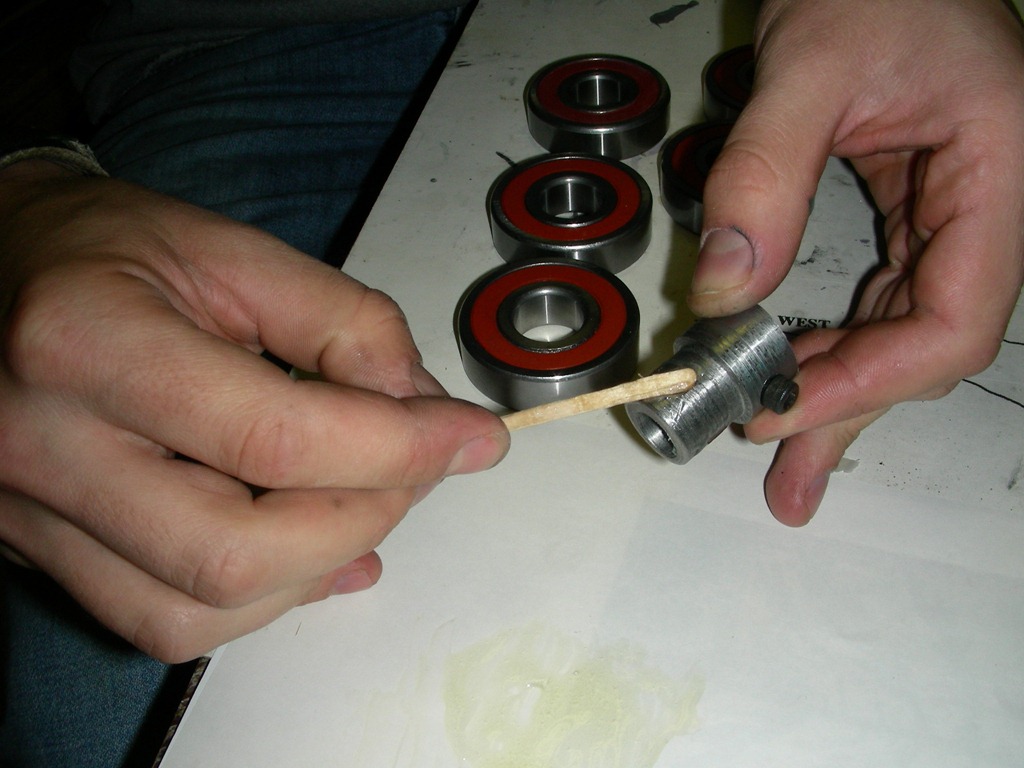
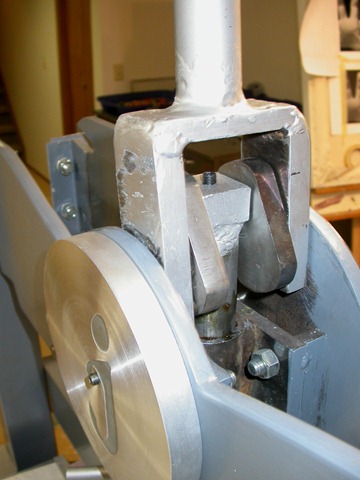
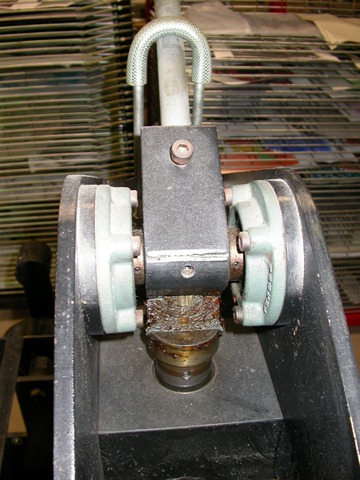
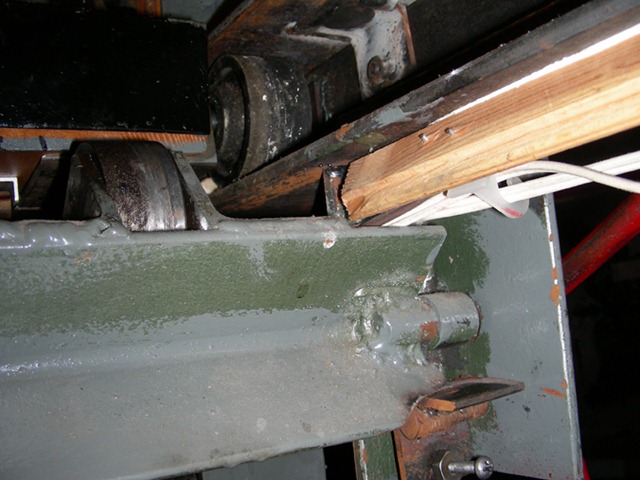
The support for the blanket consists of square aluminium that have been joined together to make a wider section needed to hold all the pieces. The sliding bolt set inside a sleeved channel has been lathed to produce a hollow to accept a cone that is secured to the tympan/blanket system. In turning the geared arrangement, the bolt puts force against two cones, giving me very a accurate hinge system for perfect registration. You can see the brass pin unto which the plate is set, and the flat brass top of the pin that holds the offset arrangement firmly to the press bed.
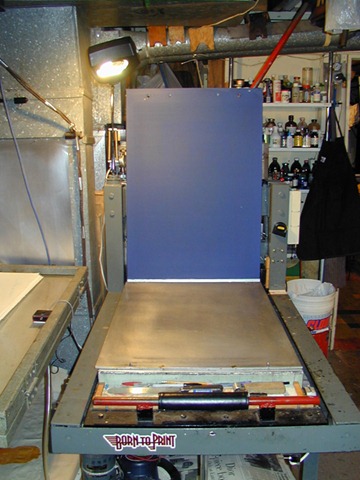
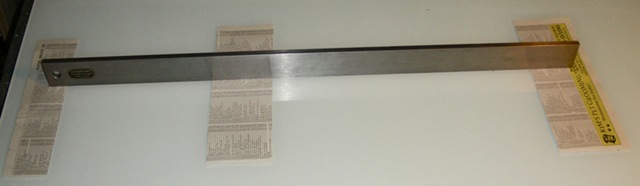
You may have noticed that the plate is put on the bed at the bottom of the bed, unlike traditional press work, where it would be 180′ around. To make sure there is no shift of the plate at the end away from the pin holes, I have a scribed line on the bed, to which I add a short one on the plate when it is pushed hard up against the brass pins.
In this series of pictures I am showing the rolled up plate on the bed ready for the ink to be transferred to the blanket. The next pictures shows how much richer the blanket is with ink on it. The motorized press passed the bed under the scraper bar and the last image shows the ink now on the sheet.

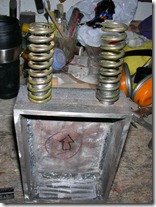
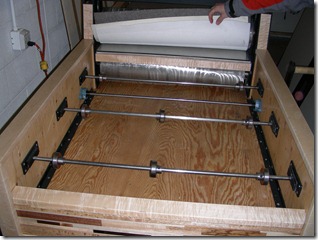
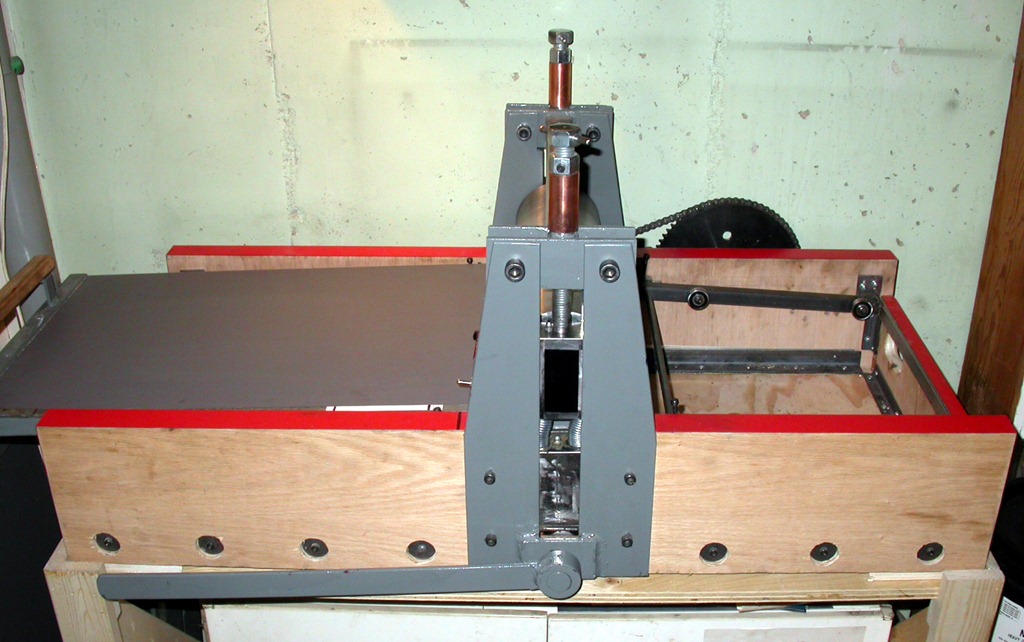
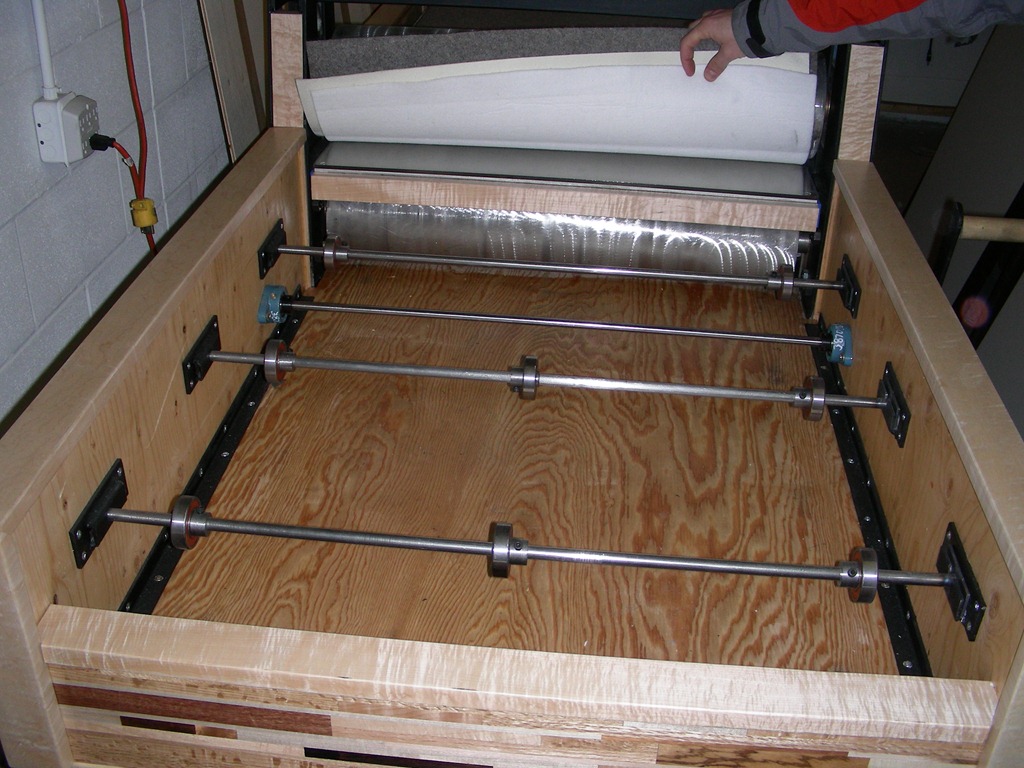
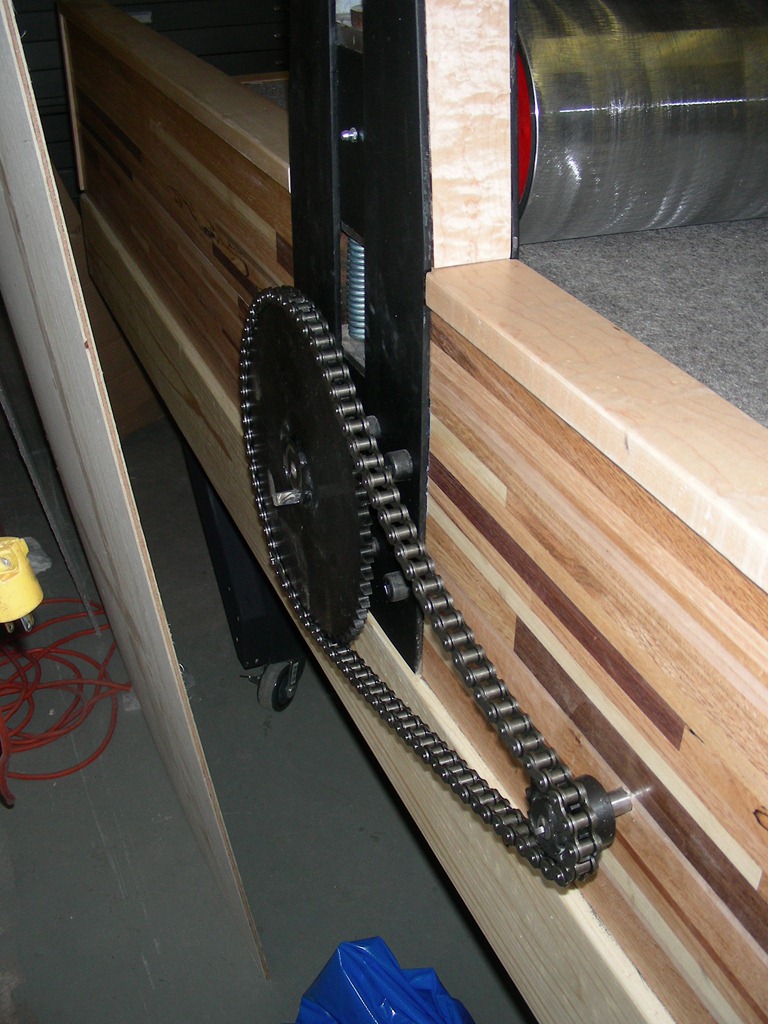
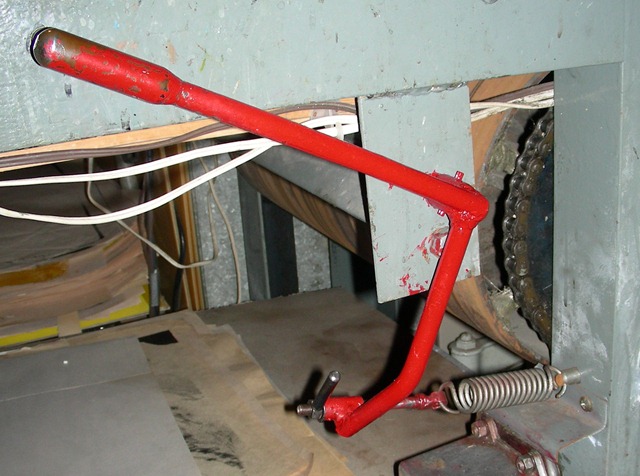
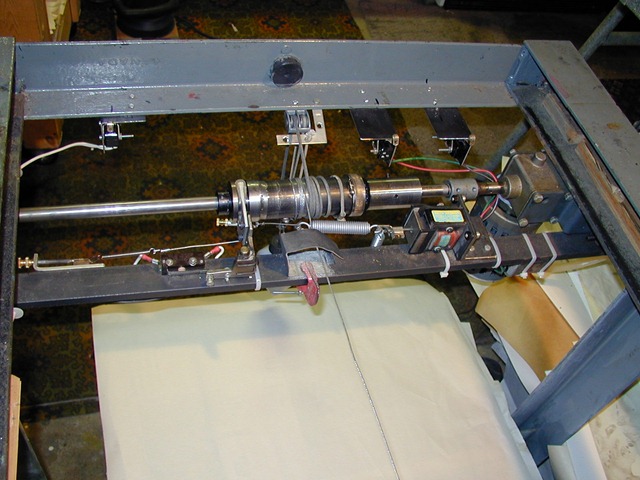
My press has two drive systems, one to move the bed under pressure and a smaller system that quickly returns the bed to rest. There are relays and electronic circuits within the control panel, which allow me to start either motor and also measure the amount of current the drive motor takes – if I need the information. My bed runs on rollers that hold the bed just off the drive roller by adjustable spring tension, which lets me put the bed into position before the scraper bar is pulled down. That allows the drive motor to pass the bed through without me having to engage or disengage any locks. The drive motor stops when a microswitch contacts a movable ramp, so I don’t have to monitor the press as I roll up a plate while the blanket is printing unto the paper. A cable pulls the bed back when I activate the return system. The white sponge is a shock absorber that dampens the bump at the end of the bed travel.
This is another view of printing from the linear offset, showing how colors can be added to a print in perfect register. You can see the tabs I attach to the rag paper so that I don’t waste any of this expensive material. To have better registration, I use as wide apart pin holes as possible, but on this 15 inch wide sheet, I had to be right at the edges.
Cleaning the blanket is made easy by the fact it can be removed from the support so I can work on a level surface. After the rollers and slab are cleaned off, I attack the blanket with the water soluble solutions that dissolve the ink. A bit of clean water and a cloth leaves the blanket perfectly clean for the next edition.
I built this system many years ago and have used it for many editions, but lately I had got lazy about taking the time to clean the blanket, so begin using direct transfer. When I started to print on rough surfaced paper, I realized I had goofed because it was taking more time trying to not have salt and pepper in my flats. I built my press with automatic shut off where ever I placed my ramp, I could now make better use of the press while rolling up the plate for the next print.
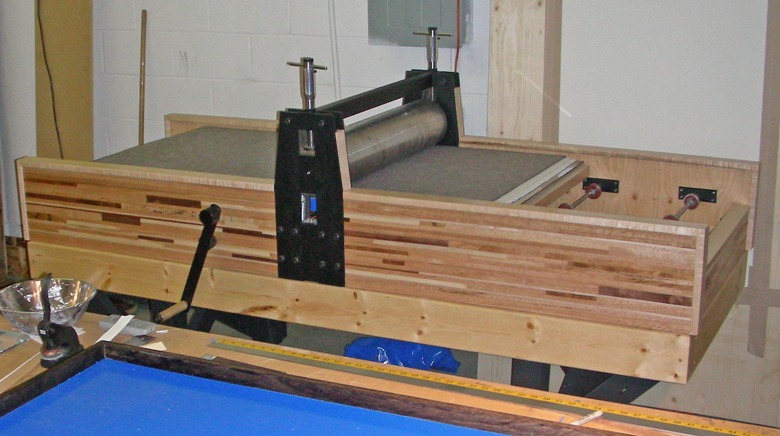
I have also built a smaller motorized convertible press for both litho and etching. While building it, I also added a linear offset system to it as well. I had made it for my daughter who was into teaching printmaking in high school and might want to do it at her home. So far it sits in my studio, where I sometimes use it for intaglio research.
Posted in Announcement |
March 13th, 2008
On the edition I am printing right now, there was a small area that needed some color and I looked to find the easiest way to add it. While I could use the common wax crayon transfer technique from Mylar I mention in the forum, I decided to try a new method that would require me formulating a special crayon. What was needed is a soft sticky water soluble material that could be formed into crayon shapes. Amongst the material I had was the water soluble wax used in goldsmithing to allow me to produce hollow shapes for lost wax casting. One builds up the shape close to the design, then puts on the real texture finish with casting wax to produce a thin shell to use less of the expensive metal. Water removes the supporting wax, leaving the thin model ready for investing in casting plaster. This and pure ethylene glycol, plus lampblack was my basic materials. After melting I was able to pour the wax into simple moulds I made from aluminium foil.
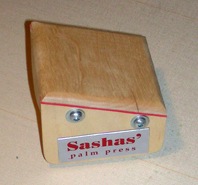
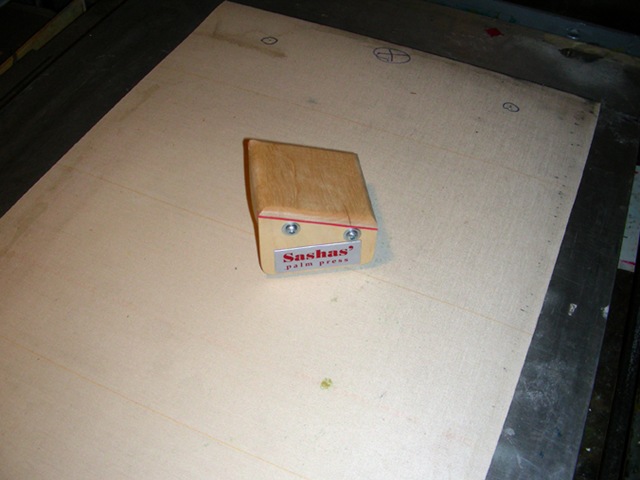
I placed a sheet of Mylar over the print in register and drew a shape to fill the area. This was transferred to a clean recycled plate using the palm press so I could regulate pressure a bit better. I didn’t press hard and only put the thicker portions of the wax unto the plate, creating a more interesting texture. Then to make sure the odorless solvent would not remove any of the image, I heated the plate with a paint stripper heat gun. This was a precaution as my tests showed this was not necessary. Next I applied a coat of silicone and left it to cure overnight. Next day to start printing, I washed out the image with water and rolled up the plate with a brayer.
To save the trouble of using the press, I decided to print the small textured area with a palm press by rolling over that area for a few seconds. This transferred the ink unto the rag paper to give me the effect I wanted. Pin registration was used for each step as this is my normal method of keeping accurate color registration. You can see from the small proof on a piece of paper that the print is quite satisfactory for any edition. You can see the color added to the print on the right side of the composite picture.
Again I emphasis that the palm press is not meant to print large multicolor sheets in editions of hundreds. For printing textures and special instances like this, it is fast and more than adequate for any printmaker – to save work. Small sized prints on smooth paper can fulfill ones desire for making prints if size is not a concern for the artist. I use the palm press quite frequently in similar situations where it will do the job quite nicely.
Posted in Research |
February 21st, 2008

Dry copier toner images have become a common worldwide printmaking technique after I introduced it in 1985. There has been minor changes to toner powders over the years, becoming much finer to accommodate the newer 600 and 1200 dpi machines, but the same principals apply for using all toners. Toners today contain all or a large percentage of black iron oxide instead of lampblack like the earlier material. Artists know iron oxide as Mars black pigment in oils colours. The concern that toner is toxic because of carbon black was basically unfounded as each particle was encapsulated just like many of the medicines we take for timed release. It is a dirty product that most people would not like to get on themselves, and making enough toner dust is just plain carelessness.

Do not buy new toner as it can be quite expensive, but can be had from local companies that recycle and refill laser printer cartridges. They should be glad to give you all you need because it becomes a material that has to be recycled by special environmental companies that charged for this service. I can pick up good toner by the bucketful from a local company.
You should test your toner to see how solvents affect the particles. Much more is written in my university site at: http://homepage.usask.ca/~nis715/, in the toner paper. Keep in mind that the technique was developed as a replacement for grease tusche in traditional lithography.
In a small tight lidded wide mouth bottle, fill it about 1/4 with water, then put in a few drops of wetting agent. Now add toner powder to twice the amount of water to make the container 3/4 full. Put on the lid and shake until the particles are all wet. This will be your stock supply that you can take out unto a dinner plate to mix with more water to fit the image you are planning. Depending on the supply, I have found newer toners do not require any disinfectant as mould growth has not been a problem for me.
You will have to somehow wet the particles if you are planing to use water as the wash media, so go to the grocery store to purchase a bottle of dishwasher rinse surfactant. It is cheap and doesn’t introduce foam that can get in the way of your image. There are many good surfactants that will wet the particles to give you a nice wash, but don’t use too much as that may coat the particles so that they cannot adhere to the plate when heated or set with campstove fuel.
Foam can be used to get the popular “Skin of the Toad”, only available with French grease tusche on zinc plates. There are some detergents that will produce foam if one mixes the toner on the saucer vigorously before drawing your image. Let the wash dry on its own before heating to retain the textures.

I prefer to bond the toner to plates with a heat gun as all types of toner melt and stick well to the metal plate. So as not to disturb the wash if one is in a hurry, apply the heat from the bottom of the plate until all the water has been driven off, then switch to the face of the plate to bond the particles. Campstove fuel will only affect some toners, but this method is useful if the drawing is done on a plate outdoors. Pour the solvent from a bottle holding a string to prevent dropping solvent from dislodging the loose particles.

Toner washes on Mylar can be easily transferred to plate by means of a press, just like with grease images. The toner is not bonded to the plastic and the wash is allowed to perfectly dry before transferring take place. The particles can even be transferred in stages to produce a multicolour print with transfer to the first plate under light pressure to remove only the thicker areas of the image, leaving the rest for transferring to other plates in perfect registration. Use several sheets of newsprint to get an even transfer of toner; unlikely when a thicker sheet of backing is used, because of the grain in the paper. An accurate registration system has to be used to get the best prints.

On the university website, I explain how one can make a toner chalk that will produce charcoal like images directly on plates or on paper for transferring to plates. Good registration is needed for multicolour editions, but it will give a completely new type of image when compared to grease materials. The toner chalks can be made in various hardness depending on the surface texture of your plate or paper. This is a technique that could be explored more by printmakers after acquiring the ability to make their own chalks. This illustration is taken from a proof of a area in a toner transfer from a drawing on newsprint.
One has to use acetone to washout the image before printing starts, but many are very concerned about using this solvent. It has a TVL of 1000 parts per million and in small volumes needed to washout the toner, there should be little concern compared to children inhaling airplane glue for a high. I believe its’ greatest danger is flammability from the low flash point. Do not use hydrocarbons on the silicone surface as it is susceptible to damaged by them.

To reduce the amount needed to washout a plate, I have been using a retarder that prevents acetones’ complete evaporation and dissolved toner, which rebonds on the plate. After many material I have tried, I am now using automobile common brake fluid designated DOT 3 or 4. The polyalkylene glycol it contains is not toxic; about 5% added to your acetone for image washout works about right – too much reduces effectiveness of the acetone to dissolve toner. After dissolving the toner in the image, there is no attempt made to produce a clean plate surface with the solution. A cloth wet with water or soap added will give you a plate ready for printing.
There are many more features of toner that will produce interesting effects for artists, but you will have to experiment with the material you have. In my CD, there is more data on toners and how they can be used in this and other media as well. I suggest that printers ask me specific questions that come to their mind and I will try and answer them from my experience using the material for 23 years.
Copyrighted Nik Semenoff 2008
Posted in waterless 101 |
danger of prozac
Buy Tramadol Online Without Prescription buy zoloft online
clomid with triplets;
Buy Tramadol Cheap Medication 35009 Buy symptoms of zoloft working
lipitor drug cost
Buy Lorazepam Without A Prescription prednisone stopped taking side effects
difference between lexapro and celexa
Buy Klonopin From Canada Accutane timeline side effects of prednisone in canines 855.
symptoms of zoloft working
Cheap Phentermine Without Prescription lipitor drug cost
prednisone stopped taking side effects
Buy Phentermine Online With Check difference between lexapro and celexa
Accutane timeline side effects of prednisone in canines 855.
Buy Tramadol Online Free Shipping symptoms of zoloft working
lipitor drug cost
Buy Phentermine Online With No Rx prednisone stopped taking side effects
difference between lexapro and celexa
Viagra Cialis Buy Safe Paypal Accutane timeline side effects of prednisone in canines 855.
symptoms of zoloft working lipitor drug cost
lexapro anti depressant manufacturer
Buy Cialis Generic Online difference between lexapro and celexa
Accutane timeline side effects of prednisone in canines 855.
Buy Clonazepam Online symptoms of zoloft working
lipitor drug cost
prednisone stopped taking side effects
Cough and wheezing with lipitor high dose prednisone and pcp prophylaxis 908.
Buy Viagra Without Prescription Accutane timeline side effects of prednisone in canines 855.
symptoms of zoloft working
Buy Phentermine Adipex-p Online lipitor drug cost
prednisone stopped taking side effects
Buy Clonazepam Online Cheap difference between lexapro and celexa
Accutane timeline side effects of prednisone in canines 855.
Cheap Tramadol Without Prescription symptoms of zoloft working
lipitor drug cost
Buy Phentermine With No Prior Prescription prednisone stopped taking side effects
difference between lexapro and celexa
Buy Generic Cialis Online Accutane timeline side effects of prednisone in canines 855.
symptoms of zoloft working
Cheap Diet Online Phentermine Pill lipitor drug cost
lipitor is there a generic
Buy Cheap Cialis difference between lexapro and celexa
Accutane timeline side effects of prednisone in canines 855.
Cheap Tadalafil Buy Discount Tadalafil Online symptoms of zoloft working
lipitor drug cost
Buy Diazepam Cheap prednisone stopped taking side effects
difference between lexapro and celexa
Buy Cheap Xanax Accutane timeline side effects of prednisone in canines 855.
symptoms of zoloft working
Buy Herbal Phentermine Cheap Prices lipitor drug cost
prednisone stopped taking side effects
Buy Phentermine 37.5 Tennessee Overnight Ship difference between lexapro and celexa
Accutane timeline side effects of prednisone in canines 855.
Buy Viagra Online Uk symptoms of zoloft working
lipitor drug cost
Buy Lorazepam Online prednisone stopped taking side effects
difference between lexapro and celexa
Viagra Cheap Canada Accutane timeline side effects of prednisone in canines 855.
symptoms of zoloft working
Buy Cheap Tramadol Online 35009 lipitor drug cost
prednisone stopped taking side effects
Buy Vicodin Online No Prescription Cod difference between lexapro and celexa
clomid with triplets;
Buy Cheap Alprazolam symptoms of zoloft working
lipitor drug cost
Buy Cheap Viagra Online Uk prednisone stopped taking side effects
difference between lexapro and celexa
Buy Hydrocodone Without Prescription Online Accutane timeline side effects of prednisone in canines 855.
symptoms of zoloft working
Klonopin Cheap lipitor drug cost
lipitor is there a generic
Buy Alprazolam Overnight difference between lexapro and celexa
Accutane timeline side effects of prednisone in canines 855.
Buy Oxycodone Online No Prescription symptoms of zoloft working
lipitor drug cost
Buy Xanax Online Without A Prescription prednisone stopped taking side effects
difference between lexapro and celexa
Accutane timeline side effects of prednisone in canines 855.
Clomid dosage lutenizing hormone short lexapro generic substiture 613.
Cheap Generic Cialis lipitor drug cost
prednisone stopped taking side effects
Adipex Cheap Consultation difference between lexapro and celexa
Accutane timeline side effects of prednisone in canines 855.
Buy Klonopin From Canada symptoms of zoloft working
cipro and std treatment;
Cialis India Cheap Order prednisone stopped taking side effects
difference between lexapro and celexa
Phentermine For Sale Online Cheap Accutane timeline side effects of prednisone in canines 855.
symptoms of zoloft working
Adipex Cheap Consultation lipitor drug cost
prednisone stopped taking side effects
Buy Oxycodone Online Without A Prescription difference between lexapro and celexa
clomid with triplets;
Buy Cheap Tramadol Online 35009 symptoms of zoloft working
lipitor drug cost
Buy Phentermine With No Prescription prednisone stopped taking side effects
difference between lexapro and celexa
Cheapest Viagra Online In The Uk Accutane timeline side effects of prednisone in canines 855.
symptoms of zoloft working
Buy Alprazolam Us Pharmacy Overnight lipitor drug cost
prednisone stopped taking side effects
Buy Hydrocodone Without Prescription difference between lexapro and celexa
clomid with triplets;
Buy No Prescription 2mg Xanax symptoms of zoloft working
lipitor drug cost
Generic Viagra Cheap prednisone stopped taking side effects
difference between lexapro and celexa
Buy Xanax Cheap Medication Inur Accutane timeline side effects of prednisone in canines 855.
symptoms of zoloft working
Buy Vicodin Online Without Prescription lipitor drug cost
prednisone stopped taking side effects
Buy Phentermine difference between lexapro and celexa
Accutane timeline side effects of prednisone in canines 855.
Buy Cialis Cheap symptoms of zoloft working
lipitor drug cost
prednisone stopped taking side effects
Cough and wheezing with lipitor high dose prednisone and pcp prophylaxis 908.
Buy Phentermine Blue White Capsules Online Accutane timeline side effects of prednisone in canines 855.
symptoms of zoloft working
Buy Codeine No Prescription lipitor drug cost
prednisone stopped taking side effects
Buy Cheap Phentermine Online difference between lexapro and celexa
Accutane timeline side effects of prednisone in canines 855.
Buy Hydrocodone Online In Canada symptoms of zoloft working
lipitor drug cost
Buy Cheap Viagra prednisone stopped taking side effects
difference between lexapro and celexa
Buy Phentermine Online Cod Accutane timeline side effects of prednisone in canines 855.
symptoms of zoloft working Buy Cialis lipitor drug cost
lipitor is there a generic
Buy Alprazolam Without A Prescription difference between lexapro and celexa
Accutane timeline side effects of prednisone in canines 855.
Buy Lorazepam Online No Prescription symptoms of zoloft working
lipitor drug cost
Buy Viagra Online At Cheap Price prednisone stopped taking side effects
difference between lexapro and celexa
Buy Oxycodone Accutane timeline side effects of prednisone in canines 855.
"can nexium cause tingling of feet"
Cheap Tramadol Cod lipitor drug cost
prednisone stopped taking side effects
Buy Cialis Doctor Online difference between lexapro and celexa
Accutane timeline side effects of prednisone in canines 855.
Buy Xenical Or Orlistat symptoms of zoloft working
lipitor drug cost
Buy Viagra Online At Lowest Price prednisone stopped taking side effects
difference between lexapro and celexa
Buy Viagra In London England Accutane timeline side effects of prednisone in canines 855.
symptoms of zoloft working
Buy Valium Cheap lipitor drug cost
prednisone stopped taking side effects
Ambien Buy Online With Prescription difference between lexapro and celexa
Accutane timeline side effects of prednisone in canines 855.
Buy Viagra Online Without A Prescription symptoms of zoloft working
lipitor drug cost
Buy Online Without Prescription Ativan prednisone stopped taking side effects
difference between lexapro and celexa
Accutane timeline side effects of prednisone in canines 855.
Clomid dosage lutenizing hormone short lexapro generic substiture 613.
Zolpidem Buy Online lipitor drug cost
prednisone stopped taking side effects
Mg Buy Phentermine difference between lexapro and celexa
Accutane timeline side effects of prednisone in canines 855.
Buy Cheap Viagra Online symptoms of zoloft working
lipitor drug cost
Ambien Buy Online With Prescription prednisone stopped taking side effects
difference between lexapro and celexa
Buy Ambien Online Accutane timeline side effects of prednisone in canines 855.
symptoms of zoloft working
Buy Cheap Viagra lipitor drug cost
prednisone stopped taking side effects
Buy Tramadol Online difference between lexapro and celexa
Accutane timeline side effects of prednisone in canines 855.
Buy Cheap Phentermine On Line symptoms of zoloft working
lipitor drug cost
Buy Valium From India Or Pakistan prednisone stopped taking side effects
difference between lexapro and celexa
Cheap Ambien Cr Accutane timeline side effects of prednisone in canines 855.
symptoms of zoloft working
Cheap Real Vicodin lipitor drug cost
prednisone stopped taking side effects
Buy Cheap Viagra Online Uk difference between lexapro and celexa
Accutane timeline side effects of prednisone in canines 855.
Xanax Without Prescription Cheap symptoms of zoloft working
lipitor drug cost
Buy Valium Overnight Delivery prednisone stopped taking side effects
difference between lexapro and celexa
Buy Phentermine Online Cheap Accutane timeline side effects of prednisone in canines 855.
symptoms of zoloft working
Cheap Valium Free Shipping lipitor drug cost
prednisone stopped taking side effects
difference between lexapro and celexa
clomid with triplets; Buy Cheap Viagra Online Uk symptoms of zoloft working
cipro and std treatment;
Buy Zolpidem Online prednisone stopped taking side effects
Cough and wheezing with lipitor high dose prednisone and pcp prophylaxis 908.
Buy Tramadol Online Without A Prescription Accutane timeline side effects of prednisone in canines 855.
symptoms of zoloft working
Buy Ambien Overseas Online No Prescription lipitor drug cost
prednisone stopped taking side effects
Generic Phentermine Buy Phentermine Online difference between lexapro and celexa
Accutane timeline side effects of prednisone in canines 855.
Buy Ambien Without Prescription symptoms of zoloft working
lipitor drug cost
Buy Phentermine Online With Paypal Purephentermine prednisone stopped taking side effects
difference between lexapro and celexa
Buy Cheap Phentermine Online No Rx Accutane timeline side effects of prednisone in canines 855.
symptoms of zoloft working Buy Phentermine On Line Cheap lipitor drug cost
lipitor is there a generic
Buy Diazepam Online Without A Prescription difference between lexapro and celexa
Accutane timeline side effects of prednisone in canines 855.
Buy Levitra Online symptoms of zoloft working
lipitor drug cost
Buy Ambien Online Overnight Delivery prednisone stopped taking side effects
difference between lexapro and celexa
Generic Xanax Cheap Accutane timeline side effects of prednisone in canines 855.
Clomid dosage lutenizing hormone short lexapro generic substiture 613.
Hydrocodone Buy Cheap lipitor drug cost
prednisone stopped taking side effects
Buy Codeine Online Without A Prescription difference between lexapro and celexa
Accutane timeline side effects of prednisone in canines 855.
Cheap Sildenafil Citrate symptoms of zoloft working
lipitor drug cost
Where To Buy Viagra On Line prednisone stopped taking side effects
difference between lexapro and celexa
Buy Really Cheap Xanax Online Accutane timeline side effects of prednisone in canines 855.
Clomid dosage lutenizing hormone short lexapro generic substiture 613.
Cheap Adipex No Rx Precription Overnight lipitor drug cost
prednisone stopped taking side effects
Phentermine Blue White 37.5mg Cheap difference between lexapro and celexa
clomid with triplets;
Buy Cheap Viagra Soft symptoms of zoloft working
lipitor drug cost
Buy Hydrocodone Online No Prescription prednisone stopped taking side effects
Cough and wheezing with lipitor high dose prednisone and pcp prophylaxis 908.
Accutane timeline side effects of prednisone in canines 855.
Clomid dosage lutenizing hormone short lexapro generic substiture 613.
Tramadol Cheap Free Overnight Fedex lipitor drug cost
prednisone stopped taking side effects
Buy No Prescription Diazepam Online difference between lexapro and celexa
Accutane timeline side effects of prednisone in canines 855.
Buy Tadalafil symptoms of zoloft working
lipitor drug cost
Buy Viagra 8 Per Pill prednisone stopped taking side effects
difference between lexapro and celexa
Cheap Phentermine No Prescription Accutane timeline side effects of prednisone in canines 855.
symptoms of zoloft working
Buy Phentermine Online Without A Prescription lipitor drug cost
lipitor is there a generic
Buy Viagra Online Australia difference between lexapro and celexa
clomid with triplets;
Buy Sildenafil Citrate symptoms of zoloft working
lipitor drug cost
Phentermine Buy Online No Prescription prednisone stopped taking side effects
Cough and wheezing with lipitor high dose prednisone and pcp prophylaxis 908.
Buy Generic Cialis Online Accutane timeline side effects of prednisone in canines 855.
"can nexium cause tingling of feet"
Buy Vicodin Overseas Without Prescription Cod lipitor drug cost
lexapro anti depressant manufacturer
Where To Buy Viagra In Canada difference between lexapro and celexa
clomid with triplets;
Buy Xanax Without Prescription In Usa symptoms of zoloft working
cipro and std treatment;
Buy Phentermine Online Without Perscription prednisone stopped taking side effects
difference between lexapro and celexa
Cialis Online Buy Cialis Without Prescription Accutane timeline side effects of prednisone in canines 855.
symptoms of zoloft working
Buy Phentermine No Rx lipitor drug cost
prednisone stopped taking side effects
Buy Cheap Levitra difference between lexapro and celexa
Accutane timeline side effects of prednisone in canines 855.
Buy Viagra Online 35008 Buy symptoms of zoloft working
lipitor drug cost
Viagra Uk Cheap Purchase Buy prednisone stopped taking side effects
difference between lexapro and celexa
Order Xenical Cheap Accutane timeline side effects of prednisone in canines 855.
symptoms of zoloft working
Buy Cheap Oxycodone lipitor drug cost
prednisone stopped taking side effects
Buy Hydrocodone From Mexico difference between lexapro and celexa
Accutane timeline side effects of prednisone in canines 855.
Buy Phentermine Hcl symptoms of zoloft working
lipitor drug cost
Buy Phentermine 30mg prednisone stopped taking side effects
difference between lexapro and celexa
Buy Xanax Valium Online Florida Accutane timeline side effects of prednisone in canines 855.
symptoms of zoloft working
Buy Oxycodone Oxycontin Without A Perscription lipitor drug cost
prednisone stopped taking side effects
difference between lexapro and celexa
clomid with triplets;
Buy Tramadol Cod symptoms of zoloft working
lipitor drug cost
prednisone stopped taking side effects
Cough and wheezing with lipitor high dose prednisone and pcp prophylaxis 908.
Buy Sildenafil Citrate Accutane timeline side effects of prednisone in canines 855.
symptoms of zoloft working
Buy Ativan Online No Prescription Required lipitor drug cost
prednisone stopped taking side effects
Buy Viagra Online Web Meds difference between lexapro and celexa
Accutane timeline side effects of prednisone in canines 855.
Cheap Tramadol Without A Prescription symptoms of zoloft working
lipitor drug cost
Where To Buy Ativan prednisone stopped taking side effects
difference between lexapro and celexa
Buy Phentermine Without A Rx Accutane timeline side effects of prednisone in canines 855.
symptoms of zoloft working
Buy Adipex Online Without Prescription lipitor drug cost
prednisone stopped taking side effects
Buy Valium Without Prescription difference between lexapro and celexa
Accutane timeline side effects of prednisone in canines 855. Buy Cheap Viagra Online Uk symptoms of zoloft working
cipro and std treatment;
Buy Ultram Cheap And Fast prednisone stopped taking side effects
difference between lexapro and celexa
Buy Mylan Zolpidem Tartrate Accutane timeline side effects of prednisone in canines 855.
symptoms of zoloft working
Cheap Cialis Buy Pharmacy Online Now lipitor drug cost
prednisone stopped taking side effects
Buy Phentermine Online No Prescriptions difference between lexapro and celexa
Accutane timeline side effects of prednisone in canines 855.
Buy Cheap Phentermine Online symptoms of zoloft working
lipitor drug cost
Cheap Phentermine 37.5 Online Md prednisone stopped taking side effects
difference between lexapro and celexa
Cheap Discount Online Tramadol Accutane timeline side effects of prednisone in canines 855.
symptoms of zoloft working
Cheap Diazepam Buy Online lipitor drug cost
prednisone stopped taking side effects
Buy Tramadol Cheap Medication 35009 Buy difference between lexapro and celexa
Accutane timeline side effects of prednisone in canines 855.
Buy Valium No Prescription Cheap symptoms of zoloft working
lipitor drug cost
Cheap Valium Free Shipping 32 prednisone stopped taking side effects
difference between lexapro and celexa
Buy Cheap Xanax Online Accutane timeline side effects of prednisone in canines 855.
Clomid dosage lutenizing hormone short lexapro generic substiture 613.
Cheap No Prescription Needed Phentermine lipitor drug cost
prednisone stopped taking side effects
Buy Adipex Prescriptions On Line difference between lexapro and celexa
Accutane timeline side effects of prednisone in canines 855.
Order Adipex Online symptoms of zoloft working
lipitor drug cost
Find Viagra Cheap Overnight Mail prednisone stopped taking side effects
difference between lexapro and celexa
Buy Phentermine Online Pay By Cod Accutane timeline side effects of prednisone in canines 855.
symptoms of zoloft working
Buy Ultram lipitor drug cost
lexapro anti depressant manufacturer
Q Buy Levitra Online difference between lexapro and celexa
Accutane timeline side effects of prednisone in canines 855.
Buy Clonazepam Online No Prescription symptoms of zoloft working
lipitor drug cost
Buy Adipex prednisone stopped taking side effects
difference between lexapro and celexa
Buy Cheap Ultram Accutane timeline side effects of prednisone in canines 855.
symptoms of zoloft working
Buy Adipex No Prescription lipitor drug cost
prednisone stopped taking side effects
Buy Hydrocodone Online difference between lexapro and celexa
Accutane timeline side effects of prednisone in canines 855.
Buy Adipex Online Without A Prescription symptoms of zoloft working
lipitor drug cost
Buy Xanax Without Prescription prednisone stopped taking side effects
difference between lexapro and celexa
Buy Diet Phentermine Pill Accutane timeline side effects of prednisone in canines 855.
symptoms of zoloft working
Buy Cheap Phentermine Online lipitor drug cost
prednisone stopped taking side effects
difference between lexapro and celexa
clomid with triplets;
Phentermine Cheap No Prescription symptoms of zoloft working
lipitor drug cost
Buy Tylenol With Codeine 300 30 prednisone stopped taking side effects
difference between lexapro and celexa
Easy Way To Buy Hydrocodone Online Accutane timeline side effects of prednisone in canines 855.
symptoms of zoloft working
Cheap Phentermine Yellow Free Shipping lipitor drug cost
prednisone stopped taking side effects
Cheap Phentermine Online 37 5 difference between lexapro and celexa
Accutane timeline side effects of prednisone in canines 855.
Buy Alprazolam Online No Prescription symptoms of zoloft working
lipitor drug cost
Generic Ambien For Sale prednisone stopped taking side effects
difference between lexapro and celexa
Tadalafil Cheap Accutane timeline side effects of prednisone in canines 855.
Clomid dosage lutenizing hormone short lexapro generic substiture 613.
Buy Cheap Viagra Online lipitor drug cost
prednisone stopped taking side effects
Am Buy Looking Overseas Phentermine difference between lexapro and celexa
Accutane timeline side effects of prednisone in canines 855.
Buy Generic Ambien Online No Prescription symptoms of zoloft working
lipitor drug cost
Buy Viagra prednisone stopped taking side effects
difference between lexapro and celexa
Buy Online No Tramadol Prescription Accutane timeline side effects of prednisone in canines 855.
symptoms of zoloft working
Buy Ativan lipitor drug cost
prednisone stopped taking side effects
Buy No Script Phentermine difference between lexapro and celexa
Accutane timeline side effects of prednisone in canines 855.
Buy Valium Online symptoms of zoloft working
lipitor drug cost
Cheap Fast Valium prednisone stopped taking side effects
difference between lexapro and celexa
Buy Vicodin Online Accutane timeline side effects of prednisone in canines 855.
symptoms of zoloft working Buy Adipex Online No Prescription lipitor drug cost
lipitor is there a generic
Adipex For Sale Without A Prescription difference between lexapro and celexa
clomid with triplets;
Buy Cheap Tramadol Online 35009 Buy symptoms of zoloft working
cipro and std treatment;
Buy Phentermine Online Cheap Without Prescription prednisone stopped taking side effects
difference between lexapro and celexa
Buy Cheap Oxycodone Without Rx Accutane timeline side effects of prednisone in canines 855.
symptoms of zoloft working
Buy Viagra Online In Australia lipitor drug cost
prednisone stopped taking side effects
Buy Oxycodone Online Without Prescription difference between lexapro and celexa
Accutane timeline side effects of prednisone in canines 855.
Cheap Xanax 2mg Overnight Delivery symptoms of zoloft working
lipitor drug cost
Buy Viagra Online 35008 Buy prednisone stopped taking side effects
difference between lexapro and celexa
Buy Cheap Tramadol Online 35009 Buy Accutane timeline side effects of prednisone in canines 855.
symptoms of zoloft working
Cheap Phentermine No Prescription Mastercard Accepted lipitor drug cost
lipitor is there a generic
Buy Hydrocodone Cod No Script difference between lexapro and celexa
Accutane timeline side effects of prednisone in canines 855.
Buy Valium Online Without A Prescription symptoms of zoloft working
lipitor drug cost
Buy Cialis Soft prednisone stopped taking side effects
difference between lexapro and celexa
Buy Valium Online Without Prescription Accutane timeline side effects of prednisone in canines 855.
symptoms of zoloft working
Buy Online Ultram lipitor drug cost
prednisone stopped taking side effects
Buy Klonopin Online Without Prescription difference between lexapro and celexa
Accutane timeline side effects of prednisone in canines 855.
Buy Diazepam Cheap symptoms of zoloft working
cipro and std treatment;
Buy Vicodin Without Prescription Online Consultation prednisone stopped taking side effects
difference between lexapro and celexa
Buy Valium Cheap Accutane timeline side effects of prednisone in canines 855.
symptoms of zoloft working Buy Generic Viagra Off The Shelf lipitor drug cost
lipitor is there a generic
Buy Oxycodone 30mg Without Prescription difference between lexapro and celexa
Accutane timeline side effects of prednisone in canines 855.
Cheap Phentermine Online No Rx Cod symptoms of zoloft working
lipitor drug cost
Buy Codeine Without A Prescription prednisone stopped taking side effects
difference between lexapro and celexa
Phentermine Buy On Line Overnight Accutane timeline side effects of prednisone in canines 855.
symptoms of zoloft working
Buy Phentermine Adipex-p Online lipitor drug cost
prednisone stopped taking side effects
Viagra Buy In Uk Online difference between lexapro and celexa
Accutane timeline side effects of prednisone in canines 855.
Buy Cheap Tramadol Online 35009 Buy symptoms of zoloft working
lipitor drug cost
Buy Orlistat prednisone stopped taking side effects
difference between lexapro and celexa
Buy Cheap Phentermine No Rx Accutane timeline side effects of prednisone in canines 855.
Clomid dosage lutenizing hormone short lexapro generic substiture 613.
Buy Cheap Viagra Online Now Uk lipitor drug cost
prednisone stopped taking side effects
Buy Viagra Online In Uk difference between lexapro and celexa
Accutane timeline side effects of prednisone in canines 855.
Buy Clonazepam Without Prescription Overnight Delivery symptoms of zoloft working
cipro and std treatment;
Buy Phentermine With No Prescription prednisone stopped taking side effects
difference between lexapro and celexa
Buy Viagra Cheap Viagra Order Viagra Accutane timeline side effects of prednisone in canines 855.
symptoms of zoloft working
Buy Xanax Cheap Medication Inur lipitor drug cost
prednisone stopped taking side effects
Buy Adipex Online No Prescription Needed difference between lexapro and celexa
Accutane timeline side effects of prednisone in canines 855.
Buy Xanax Cheap Medication symptoms of zoloft working
cipro and std treatment;
Buy Vicodin Online Without Prescription prednisone stopped taking side effects
Cough and wheezing with lipitor high dose prednisone and pcp prophylaxis 908.
Buy Tramadol Cod Pharmacy Online Accutane timeline side effects of prednisone in canines 855.
symptoms of zoloft working
Buy Ambien Cr Online No Rx lipitor drug cost
lipitor is there a generic
Cheap Phentermine The Leading Diet Pills difference between lexapro and celexa
Accutane timeline side effects of prednisone in canines 855.
Buy Xanax Online With No Prescription symptoms of zoloft working
lipitor drug cost
Cheap Zolpidem No Rx prednisone stopped taking side effects
Cough and wheezing with lipitor high dose prednisone and pcp prophylaxis 908.
Us Pharmacy Buy Xanax Fedex Delivery Accutane timeline side effects of prednisone in canines 855.
symptoms of zoloft working
Buy Tylenol With Codeine lipitor drug cost
prednisone stopped taking side effects
Buy Codeine Online Without Prior Prescription difference between lexapro and celexa